In This Episode
- 0:01 Introduction and Initial Impressions
- 1:26 Discussion on Truck Modifications and Popularity
- 4:00 Inspection of Gauges and Instrumentation
- 4:14 Further Discussion on Truck Modifications and Affordability
- 5:34 Interior Inspection and Future Plans
- 6:06 Dyno Testing and Performance Evaluation
- 11:02 Engine Options and Upgrades Discussion
- 14:00 Compression Test and Engine Health Assessment
- 16:01 Disassembly of the Truck
Video Transcript
[Eric] You're watching Powernation!
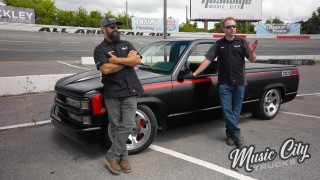
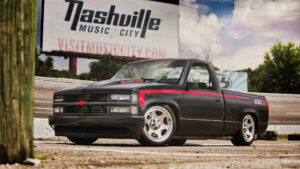
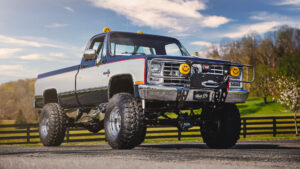
[Mike] Today on Music City Trucks we take our clapped out Chevy down the road. Then we strap it on the dyno. [Anthony] We get it in the shop, strip it down, all in the pursuit of the ultimate sport truck. [ Music ] [Mike] Hey everybody, welcome to Music City Trucks. Today we're taking out our latest project vehicle. This is a 1989 Chevrolet truck. It's a 1500 flavor and we're testing it out. Seeing how it is from a starting point. Anthony what do you think about this truck so far? [Anthony] I think it's pretty good. I definitely think the rake's a little off. We're a little high in the back, a little low in the front, but that's definitely something we're gonna be getting into and fixing. [Mike] When you look at this thing from the outside it's got some modifications that are already done. Then you say, I don't think he's really finished it. We picked this up from a guy here locally who did a lot of work to it so far but maybe didn't finish everything. Maybe he ran out of time. Maybe life got in the way. That's what happens to a lot of us. We picked this up from that guy and we're gonna change it up a little bit. We're gonna spruce it up. Maybe get a little wild and crazy with it. You'll have to tune in and see our ideas. Initial reactions going down the road here the front end is pretty light. The steering's got some play in it. That gives us an opportunity to make some modifications, fix it. Maybe even make it a little bit better. [Anthony] We're definitely gonna be doing quite a bit of work to this truck I'd say. With the popularity these trucks are starting to gain, which these trucks were really popular during the mid-'90s, early 2000s with the sport truck scene. You could walk into most dealerships and order these trucks already lowered with that four-six drop, the 15-inch billets, the billet grille and the roll pan, and you could walk out of the dealer with a fully custom truck. [Mike] When I think about these trucks growing up the thing that comes to mind old Bob Seger and that Chevy truck, Like a Rock, Oh Like a Rock! That's the '90s, these types of trucks. That comes to mind. My grand dad, he bought one of these in '93. It was a '93 model regular cab short bed. I remember riding around with him in that thing. He drove it for a few years. My dad bought it. He wore it out for a few years. So we've had this type of truck in the family for a while. I think you said something about you had some previous histories with these types of vehicles. [Anthony] I feel like most people growing up either had one of these trucks or knew somebody that did have one. Whether it was a relative, a friend. My parents had quite a few of these trucks. I'd say we had at least six of them, whether they were standard cab, short bed, or extended cabs. First truck I ever drove was a 1990 silver truck short bed single cab. Very similar to this truck, and I used to have to take the trash cans to the end of our street and we lived on a real long driveway. Unbeknownst to my dad I used to make a left turn out of the driveway and go down to the end of our street where there was a dirt field and I'd go do doughnuts. That's kinda where I cut my teeth on driving at a very young age. Maybe when I shouldn't have been. [Mike] I'm just taking the trash out. [Anthony] Just taking the trash out dad. [Mike] Turned into a little doughnut competition. [Anthony] And taught me how to handle a doughnut. [Mike] You gotta practice. Looking at these gauges it's got our check gauge light on. We've got a brake light on. We've got a gauge that's maxed out and one that's not working. We've definitely got some instrumentation issues but they added an aftermarket coolant temp gauge. Probably was the cheaper way to fix this problem. That way they can keep track of the temperature on the engine because it's accurate. [Anthony] Seems to be working. [Mike] These trucks, gaining on the steam of the popularity there these are becoming the go-to truck for a lot of hot rod enthusiasts to work on to modify. [Anthony] With the prices of the early C-10s, the first gens, the second gens, and the third gens kinda going through the roof these days these OBS trucks are coming into their own. They're still reasonable priced. They've definitely moved up a little bit but for the most part they're still a very reasonable truck to be able to get into. [Mike] Definitely are affordable. When it comes to getting a solid project cause there's affordable but then there's a lot of rust buckets. These are not old enough to where nature hasn't done their time, done their course on them. You can still get a solid project vehicle like this one right here. The interior on this thing is almost mint. The seat's got a little issue but the headliner's intact, the dash is intact. There's no cracks. That's a big thing with a lot of these newer vehicles with the plastic interiors is they want to get fragile and crack. This one is in good shape. I might change the color. I'm not fond of the blue. They may clash with some future plans but structurally it's in good shape. That was the main thing in looking for a project vehicle to start with. [Anthony] If I was to guess I would say that this was somebody's baby. Somebody cared about this truck throughout its whole life and now we're gonna care for it a little more. [Mike] We're gonna take it to the next level. [Anthony] Stand on it. The OBS gives us a few more surprises on the dyno.
[Mike] Hey guys, welcome back to Music City Trucks. No, your eyes are not deceiving you. We are in the Engine Power shop. We've got our Chevrolet up on the dyno. Pat and Frankie are gonna help us find out what this truck's gonna make. We took it down the road. It's not very impressive. What did you think about it Anthony? [Anthony] It did get us from the shop and back to the shop but other than that I was definitely not impressed with it. We could definitely use a little bit more power. [Mike] What's this thing gonna make Pat? [Pat] I don't even know. Is this numbers matching original? What are we talking here? I see a new a/c compressor. It's had some mods. [Anthony] It has some custom wiring in there as well. [Frankie] Could be the original engine. We've seen these with brand new remans in them. We've done a few of them. They don't make impressive power that's for sure. [Pat] We're here to find out. First question, who's driving? [Anthony] I've never done it before. [Pat] You're automatically nominated. [Frankie] This is the perfect truck to learn on. It's not gonna hurt itself. Not gonna be anything crazy. We'll show you how to do it and get started.
[ engine starting ] [Anthony] Get this thing fired up. [Frankie] Seems to run okay. [Anthony] We'll see what it makes. [Frankie] Go for it. [Pat] We're good. [ Music ] [Anthony] Here we go! [ engine revving ]
[Frankie] Chassis dyno pull. [Mike] What'd it do? [Pat] That is not bad, 184 horsepower and 264 pound feet. I don't know what they make stock but that's not bad. [Frankie] Pretty good for this thing potentially being 20 years old. [Pat] All that guts are still in it. That's always a good thing. [Mike] We can drive it back to our shop. [Frankie] I don't think it's leaking anything crazy. The engine didn't make any crazy noises. It has no power. So it's a slow pull. First chassis dyno pull in the books. You can tell everybody you've done a chassis dyno pull now. [Pat] That was perfect. Do another one. You've got to back it up. This thing must have a super shallow gear. It's going like a buck-40. [Frankie] It's just a slow pull all the way through. [ engine revving ]
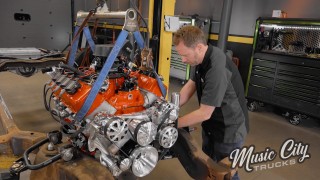
[Anthony] She was bunking a little bit on that one. [Frankie] I'm assuming the tires are probably as old as the engine. [Pat] That's a little spooky on those but that's okay. That's 180 horse and 258 for torque. The cool thing is that's a wheel speed of 153 miles per hour. [Mike] It didn't look that fast. [Anthony] Definitely did not. [Frankie] That's pretty solid for one of these being an automatic and stuff. It seems to run okay. [Pat] The nice part about that is that makes it very easy to improve on. [Mike] A lot of room for improvement. [Frankie] Easy to double, triple, quadruple the horsepower in one of these really quick cause they start out real low. [Pat] That's a success right there. [Frankie] Successful baseline chassis dyno man. [Mike] Good job. Let's see what kind of engine options we can come up with. [Anthony] Let's do that. [Frankie] I was watching the wheels and the tires were sketching me out a little bit. [Pat] Try to stay out of the blast zone. [Mike] That power level, that's not what we're looking for. We want more power with a good suspension, the manual transmission option. LS is pretty popular for these trucks. Direct injected Gen-5 LT engines are popular as well. What do you think? [Pat] First thing we'll say is what do you think about a big block? [Frankie] We had talked about that a little bit, like the old 454 SS trucks. What if you built a tribute to that? We actually have something that is perfect for this truck and it's gonna be way better than this that's for sure. [Mike] Let's see what you're talking about. [Pat] Come over to the lab. This is something I think you're really gonna like. [Frankie] I think this is perfect for your guys' project. This is a Gen-6 big block Chevy 632 cubic inches. Short block's already filled out. So this will be 11.81 to 1 static compression ratio. It has a custom ground hydraulic roller Comp in it. We have Comp evolution lifters ready for it and a bunch of other cool stuff to finish it out. [Pat] AFR 385cc head, Edelbrock Super Victor e-f-i intake with a Wilson throttle body. This is a pump gas engine. This is a street engine. So we have treated it as such and we think it's gonna rock the house. [Mike] That big block, we're looking at something with that 454 SS. Play back to the old school truck but a little bit more power than what they had. [Pat] This is gonna have a little bit more power than a 454 SS truck. [Anthony] What kind of power do you guys think it's gonna make? [Pat] This particular one is going to be in the mid to upper 700s probably. This is a pump gas engine. It's a hydraulic roller engine. This engine has done many different iterations itself. We have tailored it for this application. [Mike] Good sound, good power, I think it'll be a perfect balance for what we're trying to do. [Anthony] Looks like you boys still got some work to do. Why don't we let them get to it? [Pat] We're gonna get this thing together, get it on the dyno, and we'll go from there. [Mike] Coming up, we show you how to assess your engine's health.
[Mike] Hey guys, welcome back to the shop. Now we got our truck back from our dyno session and we're gonna tear this engine out, but before we do that we're gonna show you how to do a compression check on this one but you could do it as well at home to check the health of your engine. [ Music ] A cranking compression test is going to allow us to measure each cylinder's ability to breathe and the pressure that it generates. What we need to do is disable the fuel and the spark. The way we've done that is taken the fuse for the fuel pump out and we've also disconnected the ignition coil. That takes care of those two. Another thing is the battery. We're gonna be running this starter a lot. So we don't want the battery to drain down. We've got a battery charger hooked up to provide us enough power during our test. First thing we're gonna do is take this spark plug wire off number one and get the spark plug out. Let's see here. There she goes. It's always a good idea also to make sure the engine is at operating temperature. That way we get a little heat in there, the piston can seal up against the cylinder wall well and give you their best numbers. Take a look at our spark plug. Now we want to get our compression tester kit here. We've got our spark plug and what we need to do is match up which adapter for our engine. What you don't want is the adapter to extend too far into the cylinder and potentially run it into the piston as it's coming up and down. So this adapter right here matches for our spark plug. We'll use that and get going. Thread this into our number one cylinder there tight. What we're gonna do is spin the engine over. Anthony's gonna jump in the truck. He's gonna hit the key and hold the throttle wide open. That way we don't have any restriction at the throttle blades, and it's gonna hit five times. In other words that piston's gonna come up on the compression stroke and we'll hit five times. We'll take that number, compare it to the rest of the engine, and see what we got. Go ahead Anthony. [ engine cranking ] Alright, about 160 pounds there. What we're gonna do is go through the rest of the cylinders there, write down our results, and then see how it stacks up. So our highest one is 160 pounds, the lowest is 145. That's a difference of 15 and that falls within our 10 percent of our highest cylinder. So overall this engine is healthy for all cylinders but we're ready to get this thing out and get the truck tore apart. [Anthony] In order for us to do that we've got to get this bed off the truck. [ Music ]
[Mike] And I think a little wing nut inside of here. Let's see if she'll lift up. Oh yeah! Let's get this tailgate off of here. [Anthony] Pop these out. [Mike] Should be pretty easy. [ Music ]
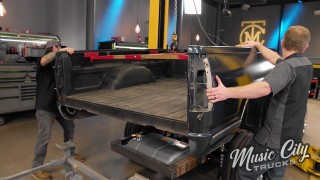
There we go. [ air ratchet humming ] [Mike] That's gone! We done yet. [Anthony] Sometimes they like to fight. [ lift mechanical humming ] [Anthony] I think we're looking pretty good right there Mike. Let's get those bolts out of the bed. [ drill humming ] [Anthony] Hey Mike, I think we're gonna need some of that Deep Creep. [Mike] Got it right here. Little bit of penetrating lube. Lets hit all of these real quick. Perfect! We're gonna hit some of these bolts with some Seafoam Deep Creep and make it a little bit easier to back them out. [ drill humming ] [Mike] Let me hit that with the big dog. [Anthony] I think that might be a good idea. There we go. [ drill humming ] [Mike] Just like that. Get this thing back on the ground. [Anthony] Try not to go through the back window. Mike you ready to go up? [Mike] Yeah, go ahead. [ Music ] [Anthony] We gonna clear the front? [Mike] Yep, all clear. Let's set her down right there. Perfect! Last thing we're gonna do is get this bumper off of here. I don't know if we're gonna reuse it or not. What do you think about a roll pan? [Anthony] I think roll pans look real good on these trucks. Cleans up the back real nice. [ drill humming ] [ Music ] [Mike] Bingo! Our project has some new developments. Shocking news in the rear of the truck.
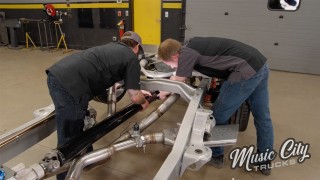
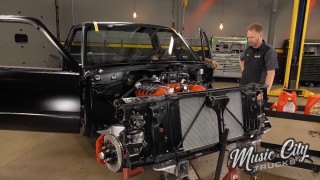
[Anthony] Hey guys, welcome back to Music City Trucks. Since you've been gone we pulled off the front fender, got the core support off the truck, and we also pulled the cab off the frame. [Mike] Now that we've got this thing down to a rolling chassis we still need to get it stripped down to the bare frame because any good project starts with a good foundation. Speaking of this project let me share some of the ideas for this cool sport truck. When Chevrolet introduced a 454 SS pickup truck it had high expectations but the performance was underwhelming. So we're gonna rip out the old tired small block and replace it with a big block. Not a 454 but a power hungry 632. We'll ditch the factory automatic transmission and slide in a gear banging stick shift. [Anthony] On the chassis side of things we're gonna be shedding the factory leaf spring set up in the rear and the spring setup in the front for an upgraded coil over suspension. Out back we're gonna pull out that old peg leg 10-bolt and add a beefier rear end to handle all that power. That will give us the aggressive stance and handling this sport truck deserves. To assist us in slowing down all these ponies we're gonna install disc brakes on all four corners. Then wrap it up with a new set of wheels and tires. [Mike] Last but not least we'll make some subtle body mods and a color change that will be reminiscent to the 454 SS namesake. We've got to get the rest of this chassis ripped down. I'm gonna get the fluids out before we start making sparks. I think this thing's almost full. So we've got plenty of gas to get out of here. [ hand crank whining ]
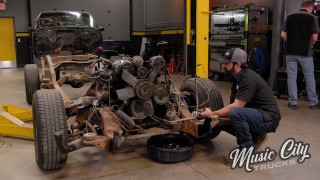
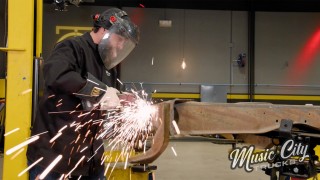
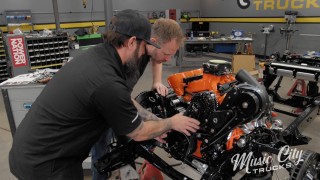
[Mike] Looks like we reached the bottom there. [ Music ] [Anthony] Get that tank all emptied out Mike? [Mike] I think we got all the gas out of there. She's ready to make some sparks. Put this neck back on there just in case. There you go! She's all yours. [Anthony] Tuck her in. [ Music ] [ torch hissing ] [ Music ] [ ratchet clicking ] [Mike] All yours. Hey she's dry. [ Music ] Oh there's another one. [ Music ] Alright, coming on in. That's as far as she goes. [Anthony] Let's see what we got here. [ Music ] Just like I planned it. [ drill humming ] [Mike] There's the trans mount. She's going now. [ Music ] We have separation. There we go. There she goes. [ drill humming ] [Mike] We'll just slide it out the front there. [ Music ] [ drill humming ] [ Music ] [ drill humming ] [ Music ] [ drill humming ] [ hammer banging metal ] [ Music ] [ drill humming ] [ Music ] [Mike] Come out of there. [ Music ] Well that's it for disassembly. This truck has come a long way. Just think, not too long ago we were running and driving this thing around. Now look at it. [Anthony] You know what? We've still got a lot of work to do. So we'll see you guys next time. [Mike] What color should we paint this thing? [Anthony] Black, white, red?
Show Full Transcript
[Mike] Today on Music City Trucks we take our clapped out Chevy down the road. Then we strap it on the dyno. [Anthony] We get it in the shop, strip it down, all in the pursuit of the ultimate sport truck. [ Music ] [Mike] Hey everybody, welcome to Music City Trucks. Today we're taking out our latest project vehicle. This is a 1989 Chevrolet truck. It's a 1500 flavor and we're testing it out. Seeing how it is from a starting point. Anthony what do you think about this truck so far? [Anthony] I think it's pretty good. I definitely think the rake's a little off. We're a little high in the back, a little low in the front, but that's definitely something we're gonna be getting into and fixing. [Mike] When you look at this thing from the outside it's got some modifications that are already done. Then you say, I don't think he's really finished it. We picked this up from a guy here locally who did a lot of work to it so far but maybe didn't finish everything. Maybe he ran out of time. Maybe life got in the way. That's what happens to a lot of us. We picked this up from that guy and we're gonna change it up a little bit. We're gonna spruce it up. Maybe get a little wild and crazy with it. You'll have to tune in and see our ideas. Initial reactions going down the road here the front end is pretty light. The steering's got some play in it. That gives us an opportunity to make some modifications, fix it. Maybe even make it a little bit better. [Anthony] We're definitely gonna be doing quite a bit of work to this truck I'd say. With the popularity these trucks are starting to gain, which these trucks were really popular during the mid-'90s, early 2000s with the sport truck scene. You could walk into most dealerships and order these trucks already lowered with that four-six drop, the 15-inch billets, the billet grille and the roll pan, and you could walk out of the dealer with a fully custom truck. [Mike] When I think about these trucks growing up the thing that comes to mind old Bob Seger and that Chevy truck, Like a Rock, Oh Like a Rock! That's the '90s, these types of trucks. That comes to mind. My grand dad, he bought one of these in '93. It was a '93 model regular cab short bed. I remember riding around with him in that thing. He drove it for a few years. My dad bought it. He wore it out for a few years. So we've had this type of truck in the family for a while. I think you said something about you had some previous histories with these types of vehicles. [Anthony] I feel like most people growing up either had one of these trucks or knew somebody that did have one. Whether it was a relative, a friend. My parents had quite a few of these trucks. I'd say we had at least six of them, whether they were standard cab, short bed, or extended cabs. First truck I ever drove was a 1990 silver truck short bed single cab. Very similar to this truck, and I used to have to take the trash cans to the end of our street and we lived on a real long driveway. Unbeknownst to my dad I used to make a left turn out of the driveway and go down to the end of our street where there was a dirt field and I'd go do doughnuts. That's kinda where I cut my teeth on driving at a very young age. Maybe when I shouldn't have been. [Mike] I'm just taking the trash out. [Anthony] Just taking the trash out dad. [Mike] Turned into a little doughnut competition. [Anthony] And taught me how to handle a doughnut. [Mike] You gotta practice. Looking at these gauges it's got our check gauge light on. We've got a brake light on. We've got a gauge that's maxed out and one that's not working. We've definitely got some instrumentation issues but they added an aftermarket coolant temp gauge. Probably was the cheaper way to fix this problem. That way they can keep track of the temperature on the engine because it's accurate. [Anthony] Seems to be working. [Mike] These trucks, gaining on the steam of the popularity there these are becoming the go-to truck for a lot of hot rod enthusiasts to work on to modify. [Anthony] With the prices of the early C-10s, the first gens, the second gens, and the third gens kinda going through the roof these days these OBS trucks are coming into their own. They're still reasonable priced. They've definitely moved up a little bit but for the most part they're still a very reasonable truck to be able to get into. [Mike] Definitely are affordable. When it comes to getting a solid project cause there's affordable but then there's a lot of rust buckets. These are not old enough to where nature hasn't done their time, done their course on them. You can still get a solid project vehicle like this one right here. The interior on this thing is almost mint. The seat's got a little issue but the headliner's intact, the dash is intact. There's no cracks. That's a big thing with a lot of these newer vehicles with the plastic interiors is they want to get fragile and crack. This one is in good shape. I might change the color. I'm not fond of the blue. They may clash with some future plans but structurally it's in good shape. That was the main thing in looking for a project vehicle to start with. [Anthony] If I was to guess I would say that this was somebody's baby. Somebody cared about this truck throughout its whole life and now we're gonna care for it a little more. [Mike] We're gonna take it to the next level. [Anthony] Stand on it. The OBS gives us a few more surprises on the dyno.
[Mike] Hey guys, welcome back to Music City Trucks. No, your eyes are not deceiving you. We are in the Engine Power shop. We've got our Chevrolet up on the dyno. Pat and Frankie are gonna help us find out what this truck's gonna make. We took it down the road. It's not very impressive. What did you think about it Anthony? [Anthony] It did get us from the shop and back to the shop but other than that I was definitely not impressed with it. We could definitely use a little bit more power. [Mike] What's this thing gonna make Pat? [Pat] I don't even know. Is this numbers matching original? What are we talking here? I see a new a/c compressor. It's had some mods. [Anthony] It has some custom wiring in there as well. [Frankie] Could be the original engine. We've seen these with brand new remans in them. We've done a few of them. They don't make impressive power that's for sure. [Pat] We're here to find out. First question, who's driving? [Anthony] I've never done it before. [Pat] You're automatically nominated. [Frankie] This is the perfect truck to learn on. It's not gonna hurt itself. Not gonna be anything crazy. We'll show you how to do it and get started.
[ engine starting ] [Anthony] Get this thing fired up. [Frankie] Seems to run okay. [Anthony] We'll see what it makes. [Frankie] Go for it. [Pat] We're good. [ Music ] [Anthony] Here we go! [ engine revving ]
[Frankie] Chassis dyno pull. [Mike] What'd it do? [Pat] That is not bad, 184 horsepower and 264 pound feet. I don't know what they make stock but that's not bad. [Frankie] Pretty good for this thing potentially being 20 years old. [Pat] All that guts are still in it. That's always a good thing. [Mike] We can drive it back to our shop. [Frankie] I don't think it's leaking anything crazy. The engine didn't make any crazy noises. It has no power. So it's a slow pull. First chassis dyno pull in the books. You can tell everybody you've done a chassis dyno pull now. [Pat] That was perfect. Do another one. You've got to back it up. This thing must have a super shallow gear. It's going like a buck-40. [Frankie] It's just a slow pull all the way through. [ engine revving ]
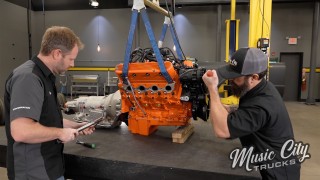
[Anthony] She was bunking a little bit on that one. [Frankie] I'm assuming the tires are probably as old as the engine. [Pat] That's a little spooky on those but that's okay. That's 180 horse and 258 for torque. The cool thing is that's a wheel speed of 153 miles per hour. [Mike] It didn't look that fast. [Anthony] Definitely did not. [Frankie] That's pretty solid for one of these being an automatic and stuff. It seems to run okay. [Pat] The nice part about that is that makes it very easy to improve on. [Mike] A lot of room for improvement. [Frankie] Easy to double, triple, quadruple the horsepower in one of these really quick cause they start out real low. [Pat] That's a success right there. [Frankie] Successful baseline chassis dyno man. [Mike] Good job. Let's see what kind of engine options we can come up with. [Anthony] Let's do that. [Frankie] I was watching the wheels and the tires were sketching me out a little bit. [Pat] Try to stay out of the blast zone. [Mike] That power level, that's not what we're looking for. We want more power with a good suspension, the manual transmission option. LS is pretty popular for these trucks. Direct injected Gen-5 LT engines are popular as well. What do you think? [Pat] First thing we'll say is what do you think about a big block? [Frankie] We had talked about that a little bit, like the old 454 SS trucks. What if you built a tribute to that? We actually have something that is perfect for this truck and it's gonna be way better than this that's for sure. [Mike] Let's see what you're talking about. [Pat] Come over to the lab. This is something I think you're really gonna like. [Frankie] I think this is perfect for your guys' project. This is a Gen-6 big block Chevy 632 cubic inches. Short block's already filled out. So this will be 11.81 to 1 static compression ratio. It has a custom ground hydraulic roller Comp in it. We have Comp evolution lifters ready for it and a bunch of other cool stuff to finish it out. [Pat] AFR 385cc head, Edelbrock Super Victor e-f-i intake with a Wilson throttle body. This is a pump gas engine. This is a street engine. So we have treated it as such and we think it's gonna rock the house. [Mike] That big block, we're looking at something with that 454 SS. Play back to the old school truck but a little bit more power than what they had. [Pat] This is gonna have a little bit more power than a 454 SS truck. [Anthony] What kind of power do you guys think it's gonna make? [Pat] This particular one is going to be in the mid to upper 700s probably. This is a pump gas engine. It's a hydraulic roller engine. This engine has done many different iterations itself. We have tailored it for this application. [Mike] Good sound, good power, I think it'll be a perfect balance for what we're trying to do. [Anthony] Looks like you boys still got some work to do. Why don't we let them get to it? [Pat] We're gonna get this thing together, get it on the dyno, and we'll go from there. [Mike] Coming up, we show you how to assess your engine's health.
[Mike] Hey guys, welcome back to the shop. Now we got our truck back from our dyno session and we're gonna tear this engine out, but before we do that we're gonna show you how to do a compression check on this one but you could do it as well at home to check the health of your engine. [ Music ] A cranking compression test is going to allow us to measure each cylinder's ability to breathe and the pressure that it generates. What we need to do is disable the fuel and the spark. The way we've done that is taken the fuse for the fuel pump out and we've also disconnected the ignition coil. That takes care of those two. Another thing is the battery. We're gonna be running this starter a lot. So we don't want the battery to drain down. We've got a battery charger hooked up to provide us enough power during our test. First thing we're gonna do is take this spark plug wire off number one and get the spark plug out. Let's see here. There she goes. It's always a good idea also to make sure the engine is at operating temperature. That way we get a little heat in there, the piston can seal up against the cylinder wall well and give you their best numbers. Take a look at our spark plug. Now we want to get our compression tester kit here. We've got our spark plug and what we need to do is match up which adapter for our engine. What you don't want is the adapter to extend too far into the cylinder and potentially run it into the piston as it's coming up and down. So this adapter right here matches for our spark plug. We'll use that and get going. Thread this into our number one cylinder there tight. What we're gonna do is spin the engine over. Anthony's gonna jump in the truck. He's gonna hit the key and hold the throttle wide open. That way we don't have any restriction at the throttle blades, and it's gonna hit five times. In other words that piston's gonna come up on the compression stroke and we'll hit five times. We'll take that number, compare it to the rest of the engine, and see what we got. Go ahead Anthony. [ engine cranking ] Alright, about 160 pounds there. What we're gonna do is go through the rest of the cylinders there, write down our results, and then see how it stacks up. So our highest one is 160 pounds, the lowest is 145. That's a difference of 15 and that falls within our 10 percent of our highest cylinder. So overall this engine is healthy for all cylinders but we're ready to get this thing out and get the truck tore apart. [Anthony] In order for us to do that we've got to get this bed off the truck. [ Music ]
[Mike] And I think a little wing nut inside of here. Let's see if she'll lift up. Oh yeah! Let's get this tailgate off of here. [Anthony] Pop these out. [Mike] Should be pretty easy. [ Music ]
There we go. [ air ratchet humming ] [Mike] That's gone! We done yet. [Anthony] Sometimes they like to fight. [ lift mechanical humming ] [Anthony] I think we're looking pretty good right there Mike. Let's get those bolts out of the bed. [ drill humming ] [Anthony] Hey Mike, I think we're gonna need some of that Deep Creep. [Mike] Got it right here. Little bit of penetrating lube. Lets hit all of these real quick. Perfect! We're gonna hit some of these bolts with some Seafoam Deep Creep and make it a little bit easier to back them out. [ drill humming ] [Mike] Let me hit that with the big dog. [Anthony] I think that might be a good idea. There we go. [ drill humming ] [Mike] Just like that. Get this thing back on the ground. [Anthony] Try not to go through the back window. Mike you ready to go up? [Mike] Yeah, go ahead. [ Music ] [Anthony] We gonna clear the front? [Mike] Yep, all clear. Let's set her down right there. Perfect! Last thing we're gonna do is get this bumper off of here. I don't know if we're gonna reuse it or not. What do you think about a roll pan? [Anthony] I think roll pans look real good on these trucks. Cleans up the back real nice. [ drill humming ] [ Music ] [Mike] Bingo! Our project has some new developments. Shocking news in the rear of the truck.
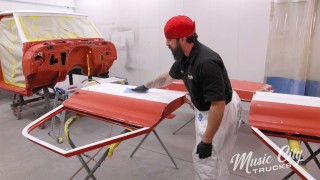
[Anthony] Hey guys, welcome back to Music City Trucks. Since you've been gone we pulled off the front fender, got the core support off the truck, and we also pulled the cab off the frame. [Mike] Now that we've got this thing down to a rolling chassis we still need to get it stripped down to the bare frame because any good project starts with a good foundation. Speaking of this project let me share some of the ideas for this cool sport truck. When Chevrolet introduced a 454 SS pickup truck it had high expectations but the performance was underwhelming. So we're gonna rip out the old tired small block and replace it with a big block. Not a 454 but a power hungry 632. We'll ditch the factory automatic transmission and slide in a gear banging stick shift. [Anthony] On the chassis side of things we're gonna be shedding the factory leaf spring set up in the rear and the spring setup in the front for an upgraded coil over suspension. Out back we're gonna pull out that old peg leg 10-bolt and add a beefier rear end to handle all that power. That will give us the aggressive stance and handling this sport truck deserves. To assist us in slowing down all these ponies we're gonna install disc brakes on all four corners. Then wrap it up with a new set of wheels and tires. [Mike] Last but not least we'll make some subtle body mods and a color change that will be reminiscent to the 454 SS namesake. We've got to get the rest of this chassis ripped down. I'm gonna get the fluids out before we start making sparks. I think this thing's almost full. So we've got plenty of gas to get out of here. [ hand crank whining ]
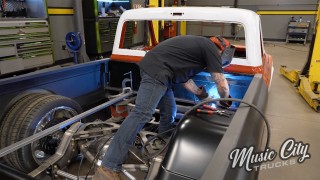
[Mike] Looks like we reached the bottom there. [ Music ] [Anthony] Get that tank all emptied out Mike? [Mike] I think we got all the gas out of there. She's ready to make some sparks. Put this neck back on there just in case. There you go! She's all yours. [Anthony] Tuck her in. [ Music ] [ torch hissing ] [ Music ] [ ratchet clicking ] [Mike] All yours. Hey she's dry. [ Music ] Oh there's another one. [ Music ] Alright, coming on in. That's as far as she goes. [Anthony] Let's see what we got here. [ Music ] Just like I planned it. [ drill humming ] [Mike] There's the trans mount. She's going now. [ Music ] We have separation. There we go. There she goes. [ drill humming ] [Mike] We'll just slide it out the front there. [ Music ] [ drill humming ] [ Music ] [ drill humming ] [ Music ] [ drill humming ] [ hammer banging metal ] [ Music ] [ drill humming ] [ Music ] [Mike] Come out of there. [ Music ] Well that's it for disassembly. This truck has come a long way. Just think, not too long ago we were running and driving this thing around. Now look at it. [Anthony] You know what? We've still got a lot of work to do. So we'll see you guys next time. [Mike] What color should we paint this thing? [Anthony] Black, white, red?