
In This Episode
- 0:00 Introduction to the video
- 0:05 Discussion about the Tri-Five Chevy
- 1:13 Introduction to Project Shell Shock
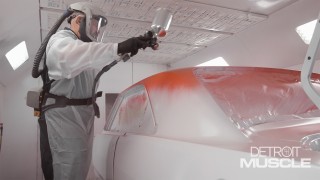
- 2:49 Reasons for choosing the project car
- 3:23 First order of business: getting the body off the chassis
- 4:04 Personal experiences and memories with Tri-Five Chevys
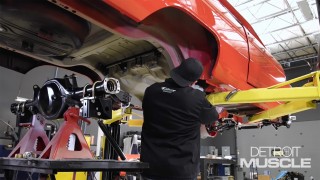
- 6:01 Working on the car and removing components
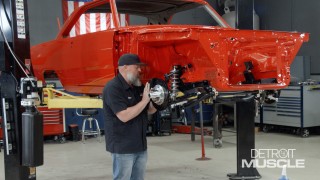
- 9:56 Separating the body from the chassis
- 10:05 Introduction to a '32 Ford hot rod
- 11:00 Discussion about the '32 Ford hot rod
- 16:58 Introduction to the next project: reinforcing the chassis
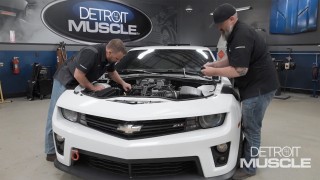
- 17:25 Discussion about the old inline six engine
- 19:09 Tearing down the interior of the '56 Chevy
Video Transcript
[Brian] You are watching Powernation!
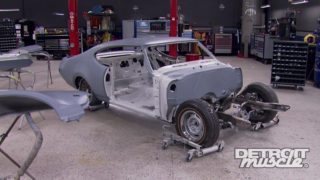
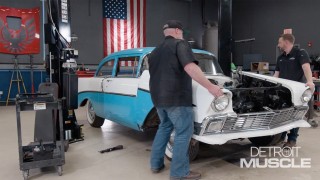
[Joel] Want to see us tear the doghouse off this old Chevy? Oh crap! Rip up the carpet searching for rust. [Brian] Here's our first patch panel. [Joel] What do we find? [Brian] Found our first treasure Joel. [Joel] Oh boy! Does it smell? All kinds of good treasures I'm sure. Find out today on Detroit Muscle. [ Music ] [ engine revving ] [ Music ] [Joel] Come on baby! Second rows didn't want to let go. Since I was knee high to a grasshopper as some southerners would say I've always wanted to build a Tri-Five Chevy. [ ratchet drive humming ] [Joel] There's just something about them. The chrome. All the many, many different ways you can put one together. Class and elegance, and they're elevated no matter how you build them. [ impact wrench humming ] [ Music ] [Joel] The Tri-Five Chevy is probably one of the most recognizable and quite frankly legendary pieces of American muscle history. It's almost a shame that we haven't done one yet. [ ratchet drive humming ] [Joel] The first thing I noticed about this '56 Chevy is that it is a good, solid foundation for a builder. I don't think Chevrolet wanted that coming off did they? [Brian] No boy, not at all. [Joel] The main reason why it took us so long to build a Tri-Five Chevy is because it had to be the right car. Any time I'm choosing a project car ideally I'd like to find something that's complete. Not missing any glass, or trim, or any of the mechanical pieces. That way you can individually inventory everything. So when you go to put the car back together you know where everything goes. [Brian] Bag and tag. [Joel] That's the good thing about Tri-Five Chevys. There's so much aftermarket support you can go pretty much any direction you want. [Brian] And go! [Joel] Come on baby! [Brian] It looks so much different with the front bumper already man. [Joel] For years we've been chomping at the bit to build ourselves a Tri-Five Chevy and now here she is. She might be missing her face but if you ask me she's still quite the looker. This is our 1956 Chevrolet 210 Sedan that we have dubbed as Project Shell Shock. A staple of the hot rodding community if there ever was one. People have been known to build these cars in every which way but loose. Gassers, street rods, hot rods, you name it. If there's a way to build a car someone has built a Tri-Five Chevy in that manner. [Brian] Obviously this is a nice car guys. Garage kept and appears to be rust free. Some purists would prefer that we don't even touch this vehicle but there's a couple of things you might want to know starting with number one. The engine is not a numbers matching engine for this vehicle. Number two, this is not the original paint as the prior paint work is starting to show its age. And number three, this car's not a Bel Air. So this gives us an opportunity to do anything that we want to this vehicle without sawing the horn off of a unicorn. [Joel] On that note our first order of business is getting the body off the chassis. [Brian] You know growing up it was always my dream to work on a Tri-Five Chevy. It was always iconic to me. As a kid you see these riding down the road, even at the dragstrip. It was always the people you looked up to, you admired. One day we'll have one of these, you know. It's just cool right now to be able to do that finally. Did you ever think you'd be working on one of these like this? As a kid you know? [Joel] I always wanted to. [Brian] That a temp sensor? Probably three quarter. [ Music ]
[Joel] Never mind Brian, it came out on its own. I never get that lucky. Usually they just break off. [Brian] You just gonna leave that on there? You want me to label it? [Joel] Nah! [Brian] Pretty obvious what it is right? [Joel] Alright big guy, you want to do the honors? [Brian] Yes sir, going up. [ lift mechanical humming ] [ Music ] [Brian] Watch yourself. Third floor! [Joel] Let's take a gander. She's nasty, grimy. It's hard to tell though cause sometimes people will do a shady repair and then just cover it in undercoat. Don't seem too bad. What else do we need to disconnect? [Brian] Exhaust. [Joel] Actually exhaust looks like its. [Brian] This one's attached to the frame right? [Joel] I don't see any hangers on the body. We've got one fuel line. Rear shocks. Parking brake cable. [Brian] Body mounts. [Joel] Really not much attached to the body. What side do you want. You want the front or the back? [Brian] I'll take the front. [Joel] Party's in the rear anyway. [Brian] Coming up, we have an out of body experience as we cut through 70 years of rust. [Joel] Had to get angry with it.
[ Music ]
[ impact wrench humming ] [Brian] Wow, didn't sound too happy there my friend. [Joel] GM did not want those coming off. [ impact wrench humming ] [Brian] Look at this bolt right here. [Joel] It's a little worse for wear. Probably had another 100,000 miles left on it. [ hammer banging ] [Joel] If nothing else Brian you sure know how to make a mess. Just keep the sparks that direction. Don't feel like burning down a Tri-Five Chevy today. Now on our original chassis the rear shocks mounted to the leaf spring plates and the underside of the body, which makes them a little bit more flimsy when you're launching off the line. It's amazing how much of this little stuff will get in the way when you're trying to pull a body off a frame. A lot of the times you don't even realize it's hung up until you're hung up. One cool thing about these old Tri-Five Chevys is based on where the car was manufactured you may have either gotten a one piece or a two piece chassis. This car in particular is a two piece chassis and you can tell by the welding seams near the rear axle. [ saw buzzing ] [Joel] But if it was a one piece frame or as a lot of people call them "California Frames" it would be seamless. Contrary to popular belief you may have a California chassis but that doesn't necessarily mean the car was manufactured in California. A big reason why the majority of frames that came out of California were one piece is because they wanted to make them more structurally sound because of all the salt from the beaches. They also added a little extra undercoating just for a little bit more insurance. Regardless if you had a one piece or a two piece chassis they all came as a boxed frame, meaning no C-channel. Back in the day that's why these chassis were so popular in drag racing because they were some of the strongest out there. But technology has come a long ways in 70 years. One down. [Brian] One down! You know when you're working on an older project like this bolts tend to seize up, nuts tend to rust up. Sometimes it's just easier to cut them off. You can't even get them out from there. [ grinder buzzing ] [ Music ] [Brian] There I go. Being stubborn. Done sir. [Joel] Had to get angry with it. We got everything unhooked underneath. So we're ready to pull the body off the frame. Go ahead Brian. I'll watch, you push. [Brian] Up we go! [Joel] Still good. Still good. I hear something. [Brian] We're leaking anti-freeze in the front too. [Joel] Classic. [ Music ]
So far if that's the only thing we're hung up on. [Brian] Ah, center support. Is that something we can reach on a creeper maybe? [Joel] I think I can get in there but not on a creeper. If this thing lands on me just know this is how I would have wanted to go. [Brian] I'll finish the car for you. I had a '71 C-10 when I was growing up Joel. That was my first truck. It had a two piece driveshaft in it with the center support bearing and a short bearing. First of all it makes no sense right, but I can't tell you how many center bearings I put in that truck and they kept going out. It never would last. Laying on my back in the driveway in the gravel. [Joel] I think they call that character development. Keto diet's paying off right now. [Brian] Glad you did that before lunch. [ lift – mechanical humming ] [Brian] Good? [Joel] Yep. [ lift - mechanical humming ] [Joel] All the way to the top. And just like that you too can separate a body from a chassis on a Tri-Five Chevy. I'm gonna go take a shower. Up next, we go under the hood of a hot rod that's one cool, classy custom.
[Joel] Two hot rods that go well together, a Tri-Five Chevy and a '32 Ford. And we recently went under the hood of one of those cars that had classic styling and modern performance. To see the full version head on over to Powernation TV.
[ engine rumbling ] [ camera shutter clicking ] [ engine rumbling ] [ horn honking ] [ engine rumbling ] [ swing music ] [ Music ]
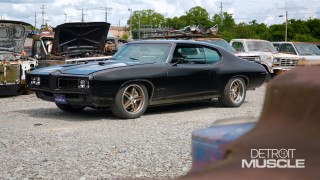
[ engine revving ] [ Music ] [Narrator] Powernation under the hood is brought to you by Summit Racing Equipment. [Tommy] Hot rodding was born out of rebellion. This Deuce Coupe defies authority. Mister Brad that is one pretty little '32. [Brad] Tommy, good to see you. Thank you man. [Tommy] Thanks for that cool car you brought in here man. [Brad] I was afraid it might blend into the background but looks like it stands out pretty good. [Tommy] She's a looker. That paint job looks like you could walk off in it man. [Brad] That's many, many hours, and raw hands, and wore out buffing pads, and lot of sweat. [Tommy] It shows that you guys put some effort into that thing. I don't know if you can get any cooler than a '32 Ford. [Brad] Especially chopped, black, lot of horsepower. That's where it's at. [Tommy] With the chop on this thing how much did you cut it? [Brad] That one's three and a half. [Tommy] That's three and a half square. [Brad] Yeah. Sometimes we'll do a little more in the front but this one's a square chop. [Tommy] How hard was it to fill in the roof? [Brad] That's quite the task too. That's one of those panels that you think it's flat until you try to make it and a slight dome is way harder to do thank a heavy dome. [Tommy] It's only a panel that's four foot by three foot. [Brad] Sometimes you've got to have an assistant. You know about that? [Tommy] Looking at this thing, the bright work, there really isn't a whole lot of it. That's not just regular chrome either is it? [Brad] It's all nickel plated. A lot of the stuff that is normally bright work on a lot of these cars we did in a satin black just to break it up. Not put too much nickel on it but at the same time not everything be gloss. [Tommy] I know it's a '32 Ford but it has that modern feel to it. [Brad] It ties in with the drivetrain a little bit and some other suspension parts that we tried to do a little bit upgraded but still keep the car very traditional. [Tommy] It's got that iconic traditional look to it for sure. I like the rubber step. Was that to keep from somebody messing up stepping on that pretty black paint job? [Brad] Yeah, it's a lot less maintenance. You don't have to worry about the rock chips, stuff like that, but also that traditional look. Keep that traditional tied in. [Tommy] The car's supposed to have that from back in the day. What's the deal with the wheels? I was thinking that was round at first. [Brad] Those are ovals. We got that idea from a picture we saw of a '59 Jaguar race car. We actually put the center caps together using a '68 Camaro disc brake cap and then a '65 Riviera knock off. [Tommy] How'd you come up with the recipe of, we just need a Riviera? [Brad] It was extra parts laying around in the warehouse. So we just threw it all together and seen what worked, and it worked. [Tommy] I gotta check out this interior now. It's black in here too! Getting into one of these cars is a little bit different than most. It's like a procedure. You've gotta back into it. [Brad] Getting out's a little trickier than getting in. Push button start. [Tommy] What's that gauge cluster? [Brad] That's a '50 Olds. Dakota Digital re-did them. [Tommy] I like this thing man. I like that a lot. That shut pretty easy. [Brad] That's the way it's supposed to be. [Tommy] It's simple but it's unreal how many cars out there that people are like, you gotta double back, slam it. [Brad] It's unreal how many hours it takes to make one shut like that too. That's a lot of adjustment and getting things right and dialed in. [Tommy] You can have it done in a weekend right? I've gotta ask. I gotta see what's under the hood. [Brad] That's probably the diamond in the box right there. [Tommy] Is it loud? Is it powerful? [Brad] Yeah. [Tommy] We need to see it for sure. Let me get out of your way. [ Music ] Nice and easy. The suspense is killing me. So that's not what I was expecting. [Brad] No? I don't really know that there's any more out there in a '32 that would have a supercharged LT-4. [Tommy] So it's making how much? [Brad)>> Should be around 680. [Tommy] And it weighs? [Brad] 2,300 pounds, 2,400 pounds. [Tommy] Sling shot! Have you had it at full throttle? [Brad] For just a couple of seconds. That's about all I wanted. [Tommy] I could see it for sure. [Brad] The first time it reacts way different than what you're expecting. It was surprising. [Tommy] What about this tank up here? [Brad] I made that out of eighth inch aluminum to match the blower cover. That is for the supercharger. That's the cooler. It runs through the intercooler that's mounted in the grille and circulates the water through the supercharger. That was flat metal and I shaped it and machined bungs to weld in here. I bought the cap. Then I machined the plate. That was easy. Just ordered one. Teemu probably or something. Machined the front of it to match the top of the supercharger. [Tommy] It's the complete package man. '32 is traditional but what you've done to it is untraditional. Man you've knocked it out of the park. [Brad] Thank you. Appreciate it. [Tommy] Thank you man. This is awesome! [Brad] We'll go for a ride. [Tommy] We're done here. See you guys later. [ Music ] [Brian] Coming up, look at these spark-o-matic speakers man. We go digging through a treasure trove of the unknown.
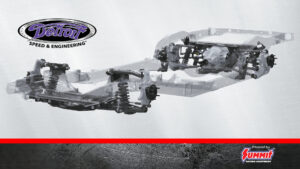
[Joel] For the first time in 70 years the body and chassis on our old '56 Chevy are no longer one unit but I promise you it's all for a good cause. We are gonna literally be quintupling the horsepower that this car came with from the factory. In order to do that we're gonna need some serious reinforcements. We notified the guys at Checkered Racing of our lofty goals for our old Shoebox Chevy and they came through with this custom reinforced tailormade chassis. It comes with everything we're gonna need to handle all the horsepower and torque output that this thing's gonna rip down the track including ladder bars, a nine inch axle with a back brace, custom boxed in reinforcement in each corner, weld-in tubular crossmembers, four wheel disc brake conversion with drilled and slotted rotors and polished calipers, and some QA-1 Chromastar adjustable rear coil overs. Now our old chassis was plenty strong enough to handle the horsepower of this inline six but don't count out these old stow bolt sixes. They're a pioneer of automotive engineering if you ask me. This one specifically runs like a top but that wasn't exactly the case when we first got it. Is that your jake brake? [Tommy] It's that motor that was running perfectly good until you started bragging on it. [Joel] This 235 inline six had a slight vibration and a ticking noise coming from the valvetrain. So we dumped a bottle of Seafoam High Mileage Engine Treatment down the crankcase. This is a good practice for any engine you plan to keep if you're not familiar with its maintenance history. The more we drove it the better it seemed to run. So down the road if we decide to use it for another project we have that option. So we're gonna hang on to this old six banger but for right now we need to get those old chassis out of our way so that we can start tearing down our new one to add a few custom touches. [Brian] Think we should tell them what we're doing. [Joel] Nah, we'll leave them in suspense. We're swapping out the interior on our old '56 Chevy because we kinda want to go for that cool gasser nostalgic feel on the inside. So ideally we're gonna throw in a couple of bucket seats maybe out of a Chevelle, or Impala, or something like that just depending on what we can find. [Brian] Found our first treasure Joel. Rodent repellant. [Joel] I just heard rodent and so I stopped what I was doing. It's like moving a couch in an apartment complex. [Brian] Heavy as a couch. [ Music ]
There we go. [Joel] One of my favorite parts of a teardown on any build is going through stuff, pulling the seats, pulling the carpet back, and you never know what you're gonna find in those things. Think we'll find a build sheet? [Brian] No build sheet sir. Nothing interesting in here. Just a clean ole seat. These factory seat covers are amazing. [Joel] All kinds of good stuff under here. [Brian] Forest fresh. [Joel] That was my nickname in college. Now we've got enough air fresheners in here to last us a couple of winters really. [Brian] Flavors for all the seasons. [Joel] Is it flavors or scents? [Brian] Out with the old. When I think about a Tri-Five Chevy the first thing that comes to mind interior wise is the dash. Chrome gauge cluster above the steering column on the driver's side. Passenger's side has the same style over there. Iconic and amazing. [Joel] Look at that. Dude look at the color on that. That's about as solid as a 70 year old car can get. [Brian] Well taken care of. Let me set this out. There's our first patch panel. You can even see the moisture line up here at the top. [Joel] Shoot still for 70 years old. [Brian] Outstanding! When we started this guys we decided that we had a vision for this build. Simple light weight race cars for the everyday person. We're gonna try to stay as true to that as we can. [Joel] It's almost hard to believe that earlier today this was a perfectly running and driving automobile but now our '56 Chevy is a shell of its former self but we're not done yet. We've got to address a little bit of rust and shore up the firewall. Once that's done we've got some plans to make this one of the baddest gassers on the planet.
Show Full Transcript
[Joel] Want to see us tear the doghouse off this old Chevy? Oh crap! Rip up the carpet searching for rust. [Brian] Here's our first patch panel. [Joel] What do we find? [Brian] Found our first treasure Joel. [Joel] Oh boy! Does it smell? All kinds of good treasures I'm sure. Find out today on Detroit Muscle. [ Music ] [ engine revving ] [ Music ] [Joel] Come on baby! Second rows didn't want to let go. Since I was knee high to a grasshopper as some southerners would say I've always wanted to build a Tri-Five Chevy. [ ratchet drive humming ] [Joel] There's just something about them. The chrome. All the many, many different ways you can put one together. Class and elegance, and they're elevated no matter how you build them. [ impact wrench humming ] [ Music ] [Joel] The Tri-Five Chevy is probably one of the most recognizable and quite frankly legendary pieces of American muscle history. It's almost a shame that we haven't done one yet. [ ratchet drive humming ] [Joel] The first thing I noticed about this '56 Chevy is that it is a good, solid foundation for a builder. I don't think Chevrolet wanted that coming off did they? [Brian] No boy, not at all. [Joel] The main reason why it took us so long to build a Tri-Five Chevy is because it had to be the right car. Any time I'm choosing a project car ideally I'd like to find something that's complete. Not missing any glass, or trim, or any of the mechanical pieces. That way you can individually inventory everything. So when you go to put the car back together you know where everything goes. [Brian] Bag and tag. [Joel] That's the good thing about Tri-Five Chevys. There's so much aftermarket support you can go pretty much any direction you want. [Brian] And go! [Joel] Come on baby! [Brian] It looks so much different with the front bumper already man. [Joel] For years we've been chomping at the bit to build ourselves a Tri-Five Chevy and now here she is. She might be missing her face but if you ask me she's still quite the looker. This is our 1956 Chevrolet 210 Sedan that we have dubbed as Project Shell Shock. A staple of the hot rodding community if there ever was one. People have been known to build these cars in every which way but loose. Gassers, street rods, hot rods, you name it. If there's a way to build a car someone has built a Tri-Five Chevy in that manner. [Brian] Obviously this is a nice car guys. Garage kept and appears to be rust free. Some purists would prefer that we don't even touch this vehicle but there's a couple of things you might want to know starting with number one. The engine is not a numbers matching engine for this vehicle. Number two, this is not the original paint as the prior paint work is starting to show its age. And number three, this car's not a Bel Air. So this gives us an opportunity to do anything that we want to this vehicle without sawing the horn off of a unicorn. [Joel] On that note our first order of business is getting the body off the chassis. [Brian] You know growing up it was always my dream to work on a Tri-Five Chevy. It was always iconic to me. As a kid you see these riding down the road, even at the dragstrip. It was always the people you looked up to, you admired. One day we'll have one of these, you know. It's just cool right now to be able to do that finally. Did you ever think you'd be working on one of these like this? As a kid you know? [Joel] I always wanted to. [Brian] That a temp sensor? Probably three quarter. [ Music ]
[Joel] Never mind Brian, it came out on its own. I never get that lucky. Usually they just break off. [Brian] You just gonna leave that on there? You want me to label it? [Joel] Nah! [Brian] Pretty obvious what it is right? [Joel] Alright big guy, you want to do the honors? [Brian] Yes sir, going up. [ lift mechanical humming ] [ Music ] [Brian] Watch yourself. Third floor! [Joel] Let's take a gander. She's nasty, grimy. It's hard to tell though cause sometimes people will do a shady repair and then just cover it in undercoat. Don't seem too bad. What else do we need to disconnect? [Brian] Exhaust. [Joel] Actually exhaust looks like its. [Brian] This one's attached to the frame right? [Joel] I don't see any hangers on the body. We've got one fuel line. Rear shocks. Parking brake cable. [Brian] Body mounts. [Joel] Really not much attached to the body. What side do you want. You want the front or the back? [Brian] I'll take the front. [Joel] Party's in the rear anyway. [Brian] Coming up, we have an out of body experience as we cut through 70 years of rust. [Joel] Had to get angry with it.
[ Music ]
[ impact wrench humming ] [Brian] Wow, didn't sound too happy there my friend. [Joel] GM did not want those coming off. [ impact wrench humming ] [Brian] Look at this bolt right here. [Joel] It's a little worse for wear. Probably had another 100,000 miles left on it. [ hammer banging ] [Joel] If nothing else Brian you sure know how to make a mess. Just keep the sparks that direction. Don't feel like burning down a Tri-Five Chevy today. Now on our original chassis the rear shocks mounted to the leaf spring plates and the underside of the body, which makes them a little bit more flimsy when you're launching off the line. It's amazing how much of this little stuff will get in the way when you're trying to pull a body off a frame. A lot of the times you don't even realize it's hung up until you're hung up. One cool thing about these old Tri-Five Chevys is based on where the car was manufactured you may have either gotten a one piece or a two piece chassis. This car in particular is a two piece chassis and you can tell by the welding seams near the rear axle. [ saw buzzing ] [Joel] But if it was a one piece frame or as a lot of people call them "California Frames" it would be seamless. Contrary to popular belief you may have a California chassis but that doesn't necessarily mean the car was manufactured in California. A big reason why the majority of frames that came out of California were one piece is because they wanted to make them more structurally sound because of all the salt from the beaches. They also added a little extra undercoating just for a little bit more insurance. Regardless if you had a one piece or a two piece chassis they all came as a boxed frame, meaning no C-channel. Back in the day that's why these chassis were so popular in drag racing because they were some of the strongest out there. But technology has come a long ways in 70 years. One down. [Brian] One down! You know when you're working on an older project like this bolts tend to seize up, nuts tend to rust up. Sometimes it's just easier to cut them off. You can't even get them out from there. [ grinder buzzing ] [ Music ] [Brian] There I go. Being stubborn. Done sir. [Joel] Had to get angry with it. We got everything unhooked underneath. So we're ready to pull the body off the frame. Go ahead Brian. I'll watch, you push. [Brian] Up we go! [Joel] Still good. Still good. I hear something. [Brian] We're leaking anti-freeze in the front too. [Joel] Classic. [ Music ]
So far if that's the only thing we're hung up on. [Brian] Ah, center support. Is that something we can reach on a creeper maybe? [Joel] I think I can get in there but not on a creeper. If this thing lands on me just know this is how I would have wanted to go. [Brian] I'll finish the car for you. I had a '71 C-10 when I was growing up Joel. That was my first truck. It had a two piece driveshaft in it with the center support bearing and a short bearing. First of all it makes no sense right, but I can't tell you how many center bearings I put in that truck and they kept going out. It never would last. Laying on my back in the driveway in the gravel. [Joel] I think they call that character development. Keto diet's paying off right now. [Brian] Glad you did that before lunch. [ lift – mechanical humming ] [Brian] Good? [Joel] Yep. [ lift - mechanical humming ] [Joel] All the way to the top. And just like that you too can separate a body from a chassis on a Tri-Five Chevy. I'm gonna go take a shower. Up next, we go under the hood of a hot rod that's one cool, classy custom.
[Joel] Two hot rods that go well together, a Tri-Five Chevy and a '32 Ford. And we recently went under the hood of one of those cars that had classic styling and modern performance. To see the full version head on over to Powernation TV.
[ engine rumbling ] [ camera shutter clicking ] [ engine rumbling ] [ horn honking ] [ engine rumbling ] [ swing music ] [ Music ]
[ engine revving ] [ Music ] [Narrator] Powernation under the hood is brought to you by Summit Racing Equipment. [Tommy] Hot rodding was born out of rebellion. This Deuce Coupe defies authority. Mister Brad that is one pretty little '32. [Brad] Tommy, good to see you. Thank you man. [Tommy] Thanks for that cool car you brought in here man. [Brad] I was afraid it might blend into the background but looks like it stands out pretty good. [Tommy] She's a looker. That paint job looks like you could walk off in it man. [Brad] That's many, many hours, and raw hands, and wore out buffing pads, and lot of sweat. [Tommy] It shows that you guys put some effort into that thing. I don't know if you can get any cooler than a '32 Ford. [Brad] Especially chopped, black, lot of horsepower. That's where it's at. [Tommy] With the chop on this thing how much did you cut it? [Brad] That one's three and a half. [Tommy] That's three and a half square. [Brad] Yeah. Sometimes we'll do a little more in the front but this one's a square chop. [Tommy] How hard was it to fill in the roof? [Brad] That's quite the task too. That's one of those panels that you think it's flat until you try to make it and a slight dome is way harder to do thank a heavy dome. [Tommy] It's only a panel that's four foot by three foot. [Brad] Sometimes you've got to have an assistant. You know about that? [Tommy] Looking at this thing, the bright work, there really isn't a whole lot of it. That's not just regular chrome either is it? [Brad] It's all nickel plated. A lot of the stuff that is normally bright work on a lot of these cars we did in a satin black just to break it up. Not put too much nickel on it but at the same time not everything be gloss. [Tommy] I know it's a '32 Ford but it has that modern feel to it. [Brad] It ties in with the drivetrain a little bit and some other suspension parts that we tried to do a little bit upgraded but still keep the car very traditional. [Tommy] It's got that iconic traditional look to it for sure. I like the rubber step. Was that to keep from somebody messing up stepping on that pretty black paint job? [Brad] Yeah, it's a lot less maintenance. You don't have to worry about the rock chips, stuff like that, but also that traditional look. Keep that traditional tied in. [Tommy] The car's supposed to have that from back in the day. What's the deal with the wheels? I was thinking that was round at first. [Brad] Those are ovals. We got that idea from a picture we saw of a '59 Jaguar race car. We actually put the center caps together using a '68 Camaro disc brake cap and then a '65 Riviera knock off. [Tommy] How'd you come up with the recipe of, we just need a Riviera? [Brad] It was extra parts laying around in the warehouse. So we just threw it all together and seen what worked, and it worked. [Tommy] I gotta check out this interior now. It's black in here too! Getting into one of these cars is a little bit different than most. It's like a procedure. You've gotta back into it. [Brad] Getting out's a little trickier than getting in. Push button start. [Tommy] What's that gauge cluster? [Brad] That's a '50 Olds. Dakota Digital re-did them. [Tommy] I like this thing man. I like that a lot. That shut pretty easy. [Brad] That's the way it's supposed to be. [Tommy] It's simple but it's unreal how many cars out there that people are like, you gotta double back, slam it. [Brad] It's unreal how many hours it takes to make one shut like that too. That's a lot of adjustment and getting things right and dialed in. [Tommy] You can have it done in a weekend right? I've gotta ask. I gotta see what's under the hood. [Brad] That's probably the diamond in the box right there. [Tommy] Is it loud? Is it powerful? [Brad] Yeah. [Tommy] We need to see it for sure. Let me get out of your way. [ Music ] Nice and easy. The suspense is killing me. So that's not what I was expecting. [Brad] No? I don't really know that there's any more out there in a '32 that would have a supercharged LT-4. [Tommy] So it's making how much? [Brad)>> Should be around 680. [Tommy] And it weighs? [Brad] 2,300 pounds, 2,400 pounds. [Tommy] Sling shot! Have you had it at full throttle? [Brad] For just a couple of seconds. That's about all I wanted. [Tommy] I could see it for sure. [Brad] The first time it reacts way different than what you're expecting. It was surprising. [Tommy] What about this tank up here? [Brad] I made that out of eighth inch aluminum to match the blower cover. That is for the supercharger. That's the cooler. It runs through the intercooler that's mounted in the grille and circulates the water through the supercharger. That was flat metal and I shaped it and machined bungs to weld in here. I bought the cap. Then I machined the plate. That was easy. Just ordered one. Teemu probably or something. Machined the front of it to match the top of the supercharger. [Tommy] It's the complete package man. '32 is traditional but what you've done to it is untraditional. Man you've knocked it out of the park. [Brad] Thank you. Appreciate it. [Tommy] Thank you man. This is awesome! [Brad] We'll go for a ride. [Tommy] We're done here. See you guys later. [ Music ] [Brian] Coming up, look at these spark-o-matic speakers man. We go digging through a treasure trove of the unknown.
[Joel] For the first time in 70 years the body and chassis on our old '56 Chevy are no longer one unit but I promise you it's all for a good cause. We are gonna literally be quintupling the horsepower that this car came with from the factory. In order to do that we're gonna need some serious reinforcements. We notified the guys at Checkered Racing of our lofty goals for our old Shoebox Chevy and they came through with this custom reinforced tailormade chassis. It comes with everything we're gonna need to handle all the horsepower and torque output that this thing's gonna rip down the track including ladder bars, a nine inch axle with a back brace, custom boxed in reinforcement in each corner, weld-in tubular crossmembers, four wheel disc brake conversion with drilled and slotted rotors and polished calipers, and some QA-1 Chromastar adjustable rear coil overs. Now our old chassis was plenty strong enough to handle the horsepower of this inline six but don't count out these old stow bolt sixes. They're a pioneer of automotive engineering if you ask me. This one specifically runs like a top but that wasn't exactly the case when we first got it. Is that your jake brake? [Tommy] It's that motor that was running perfectly good until you started bragging on it. [Joel] This 235 inline six had a slight vibration and a ticking noise coming from the valvetrain. So we dumped a bottle of Seafoam High Mileage Engine Treatment down the crankcase. This is a good practice for any engine you plan to keep if you're not familiar with its maintenance history. The more we drove it the better it seemed to run. So down the road if we decide to use it for another project we have that option. So we're gonna hang on to this old six banger but for right now we need to get those old chassis out of our way so that we can start tearing down our new one to add a few custom touches. [Brian] Think we should tell them what we're doing. [Joel] Nah, we'll leave them in suspense. We're swapping out the interior on our old '56 Chevy because we kinda want to go for that cool gasser nostalgic feel on the inside. So ideally we're gonna throw in a couple of bucket seats maybe out of a Chevelle, or Impala, or something like that just depending on what we can find. [Brian] Found our first treasure Joel. Rodent repellant. [Joel] I just heard rodent and so I stopped what I was doing. It's like moving a couch in an apartment complex. [Brian] Heavy as a couch. [ Music ]
There we go. [Joel] One of my favorite parts of a teardown on any build is going through stuff, pulling the seats, pulling the carpet back, and you never know what you're gonna find in those things. Think we'll find a build sheet? [Brian] No build sheet sir. Nothing interesting in here. Just a clean ole seat. These factory seat covers are amazing. [Joel] All kinds of good stuff under here. [Brian] Forest fresh. [Joel] That was my nickname in college. Now we've got enough air fresheners in here to last us a couple of winters really. [Brian] Flavors for all the seasons. [Joel] Is it flavors or scents? [Brian] Out with the old. When I think about a Tri-Five Chevy the first thing that comes to mind interior wise is the dash. Chrome gauge cluster above the steering column on the driver's side. Passenger's side has the same style over there. Iconic and amazing. [Joel] Look at that. Dude look at the color on that. That's about as solid as a 70 year old car can get. [Brian] Well taken care of. Let me set this out. There's our first patch panel. You can even see the moisture line up here at the top. [Joel] Shoot still for 70 years old. [Brian] Outstanding! When we started this guys we decided that we had a vision for this build. Simple light weight race cars for the everyday person. We're gonna try to stay as true to that as we can. [Joel] It's almost hard to believe that earlier today this was a perfectly running and driving automobile but now our '56 Chevy is a shell of its former self but we're not done yet. We've got to address a little bit of rust and shore up the firewall. Once that's done we've got some plans to make this one of the baddest gassers on the planet.