In This Episode
- 0:01 Introduction and Overview
- 1:31 Engine Build Process
- 4:17 Oiling System and Oil Pump Installation
- 5:00 Cylinder Head Installation
- 6:01 Valve Train and Intake Installation
- 7:31 Front Drive Installation
- 8:03 Dyno Testing Preparation
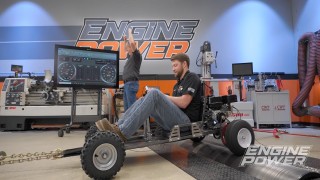
- 9:02 Naturally Aspirated Dyno Testing
- 14:04 Turbo Installation and Dyno Testing
Video Transcript
You're watching Power Nation.
Today on Engine Power,
starting to come around on the turbo sounds, right?
The power plant for Blacktop Speed Shop's Turbo Tahoe gets finished up.
It gets budget friendly induction,
looks that could kill,
and gets put under pressure
in the dyno room.
This is a killer drivable engine though.
Yeah,
this is a tire melter. That's what it is, you know.
Hey everybody,
welcome back to Engine Power.
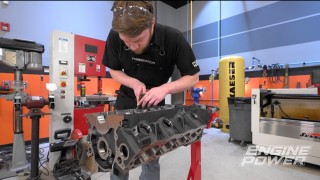
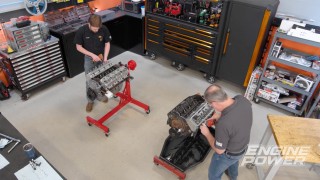
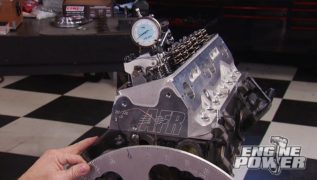
Today we are gonna be wrapping up this small block Chevy Stroker that we are building
for blacktop Speed Shop. This is going to be a turbocharged 385 cubic inch engine.
We have a 4044 3750 inch stroke.
We've got to this point because last time we did a lot of the machine work and prep work. So we got our block prep,
we balanced our Forge rotating assembly,
we painted all of our parts in their color of choice, and then we got it to short block status with our 3750 inch stroke and our Forge 4040.
4 pistons.
We have a summit Racing step nose hydraulic roller cam in there.
So it's a nice mild,
easy combination. It's going to make great power turbocharged,
and today we've got everything prepped, so we're going to wrap it up.
Yes,
we are on the downhill slide of getting this thing together and on the dyno.
We are going to put in our oiling system,
our induction package, our damper, and best of all,
we are going to dyno it two different ways.
First,
naturally aspirated to see what this budget bullet makes,
and then we're going to put the squeeze to it to make the big power. So we've got a lot to do today.
You
mean that?
To seal up the front cover, we're just using a brand new timing cover gasket and some RTV
and for this build,
because we don't need to run a cam button, we have that step nose cam, we're running a stamped steel chrome timing cover to match the look
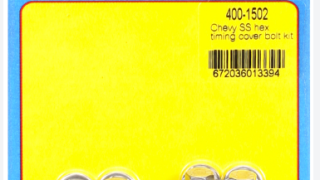
and we're gonna be holding it down with a set of ARP
stainless timing cover bolts. So this is a complete kit that they offer for small block Chevy and a bunch of other applications.
So these are made from a 300 series stainless,
and they.
Are actually extremely strong, so these have a tensile strength of around 170 to 190,000 PSI, which if you're not familiar,
is way higher than even like a grade 8 fastener.
The entire fastener is polished when it leaves their facility,
and you can compare these next to like a regular zinc coated grade 8 fastener,
and they just look so.
Much better. So when you're doing
a fit and finish polish build like this,
these things pop against black, red,
polished aluminum,
chrome,
whatever,
they're gonna make your whole engine bay look really, really nice. So
for stuff like this, we like to deck the entire engine out in these fasteners, and ARP makes these in a bunch of different kits for a bunch of different applications.
So ARP makes accessory kits for
basically every part on the engine timing covers, oil pans, intakes,
everything from the throttle body or carburetor
all the way to the bottom of the oil pan,
and they do specialty fasteners like damper bolts,
oil pump studs, all kinds of stuff like that.
So they make them in stainless and they. They have an '8740 Cro Molly that they put a nice black oxide coating on.
You can get individual kits or you can even get
complete engine accessory kits that have every bolt you need if you wanna go that route. So
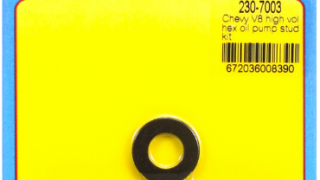
next we're gonna put on our oil pumps. We're gonna put one of their oil pump studs in and keep moving forward.
The stud is screwed in hand tight with thread locker,
and the gasket supplied in this summit pro pan kit is put in place.
The kit also came with a high volume oil pump and pickup to match the 6 quart rear sump pan.
The ARP nut is torqued to 60 pound feet to hold it in place.
Then we can use a straight edge and a tape measure to verify our pickup clearance at 3/8 of an inch.
The included one-piece oil pan gasket is set into place with RTV on the edges and corners to help prevent leaks.
Actually, a quick tip on this is when we're doing this,
before we actually do anything, we
put the pan on,
make sure all the bolts go in, make sure everything is tight because there's nothing worse than getting everything all slicked up with silicone
and then
putting the pan on and having a slight misalignment where you can't get all the bolts in.
You've got to take the whole thing back off.
So
we've already done that.
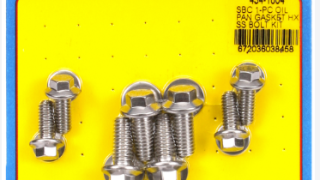
This oil pan already has our 10 turbo drain welded in and can be tightened down with a set of ARP stainless fasteners.
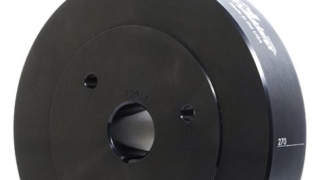
A 7.25 inch fluid damper will help control the engine's harmonics and is pressed on with an installation tool.
We'll also install this matching summit adjustable timing pointer,
which will be set for true TDC as well.
For this build, we're going to take advantage of the OE roller lifter provisions and use a set of stock replacement 842 roller lifters.
Factory dog bones keep the lifters aligned and prevent rotation,
and this is the stock spider tray that holds them down, and it is torque to 18 pound.
A set of MLS 4060 bore head gaskets with a 30,000 thickness are used to seal up the anticipated boost coming this engine's way.
All right, you know you're doing well when the cylinder heads are going on.
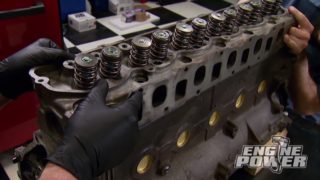
So our cylinder head of choice for this project is a Summit Racing ASC 200 cc head.
These are a very affordable head that gives great performance for the price point.
Now, if I'm not mistaken, you actually flowed these,
didn't you?
Yes,
so they have a 20.
intake,
1 600 exhaust,
they float 260 CFM at 600 lift, which
for a head that is,
these are under $1500 for a pair,
so really good price.
And honestly, we don't need anything crazy because we're boosting this engine so we can have a nice mild combo
and then we just pour the boost to it after.
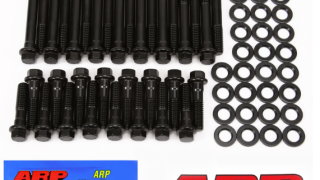
We're using a set of ARP 8740 head bolts to cinch our cylinder heads down, and because it's a stock block and the bolts go into coolant,
they all receive non-hardening thread sealer.
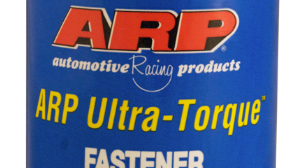
With ARP Ultra Torque in between the head of the bolt and the top of the washer,
they can all be snugg down with an impact and then torqued in 3 stages to a final value of £70 feet.
Mm
Stick around because this 383 gets sealed up,
dressed up,
and hooked up
to the dyno for testing.
We're going to start by putting the rest of the valve train on this 383,
and luckily we already had a set of trick flow 7300 long,
80,000 small 516 pushrods in-house.
They are all slid in with high pressure grease on both ends,
and the rocker studs and valve tips receive some as well.
These thrifty 38 stud extruded aluminum body roller rocker arms with a 1.6 ratio go on next and are installed in pairs in the engine's firing order.
This build is using a standard SPC firing order,
and each rocker arm is adjusted to one half turn past zero lash.
With precision beads of RTV on the china walls,
we can lay this Super Victor single-plane intake into place and lock it down with stainless ARP fasteners.
After the valve train is prelubed, the top end gets sealed up with these classic color-matched valve covers.
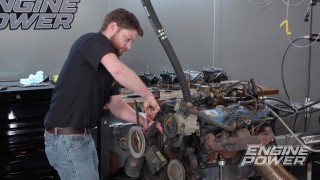
All right, one of the last things we need to install over here in the assembly area is our
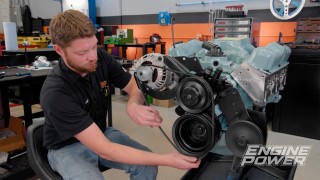
front drive, and being that this is a SEA build and
fits what the guys in Blacktop wanted, we're using an evolution kit from March Performance, which is basically like the top of the line of their accessory drives.
This is a complete kit, so it comes with everything you'll need to install it and is well engineered so everything lines up perfectly.
For Blacktop's Tahoe build,
it comes specced with a 300 amp alternator,
GM type power steering,
and a sandon AC compressor.
All right, that's the last billet cover on this front drive and it looks amazing.
Absolutely fits this build.
This thing looks spectacular. So now we're going to get it into the dyno room,
figure out fuel and ignition,
and run it naturally aspirated.
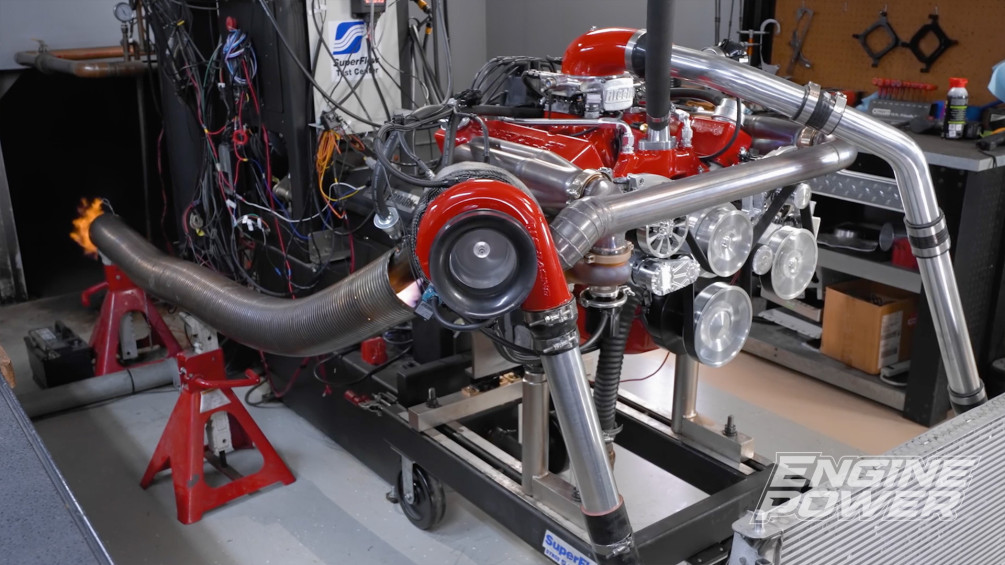
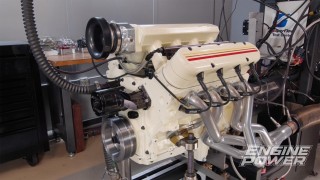
Our 383 is into the dyno room, pretty much set up and almost ready to go. We do have our turbo headers flipped around because we're gonna run them
low, but they hit our engine mount, so we're just gonna run them like boat headers for now, which will be fine.
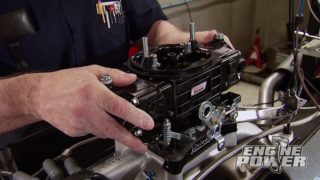
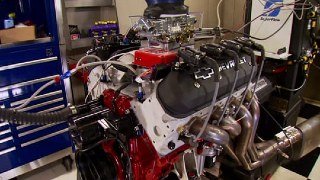
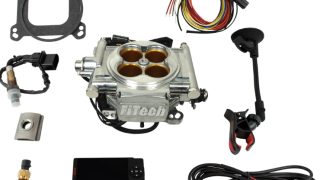
And we're gonna be topping this thing with a PTech Go EFI 1200 horsepower power adder unit. So this is a throttle body EFI system,
has 8 internal injectors with enough flow for up to 1200 horsepower,
and it has a bunch of cool other features like.
It has an internal fuel regulator, so you don't need to run an external one.
It has all the sensors housed inside,
including a 2.5 bar map sensor, so you can run this thing
for boost, either supercharged or turbocharged like we're going to,
and these things have a fully annular discharge in the venturis for proper fuel atomization.
They have nitrous control. They have dual fan control, and they have ignition time control, which we're going to use with some of their other components.
Yes, we.
the whole set up to run the ignition.
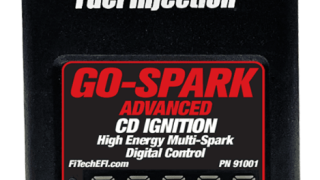
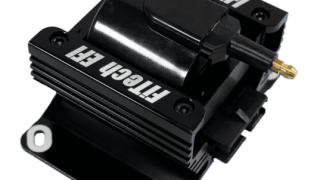
Pech has their own CDI box. It is called their Ghost Spark. It works great.
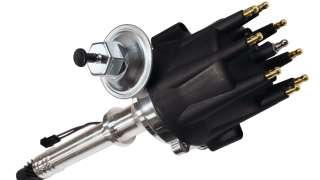
We also have one of their distributors and coils, plus a set of wires and their cap here.
Everything is going to work fantastic on this.
It's going to go in great and control everything like we need to. We like full control,
both ignition and fuel.
This is going to fit the bill,
so all we got to do is to get this stuff on the dyno and in the engine.
The EFI and ignition only take a few simple connections like battery power and ground.
And after priming the engine with oil, we can drop in the magnetic pickup distributor.
These custom-made ceramic boot wires are hooked to the spark plugs and then dual dash 6 fuel lines are tightened on the unit before we can turn the key on this 383.
Up next,
you know,
so I always do the naturally aspirated ones because, yeah, I think you put the boosted on me in case it blows up.
All right, so obviously 383 running on the dyno. So
these things, we like to get them up,
get them up to temp,
uh, we double check out everything, obviously, make sure the engine's working as it should. There's no leaks,
everything like that.
We get this thing up to temp,
get it learning.
Uh,
we cycle it through a few pools,
basically just, again, making sure everything's working the way it's supposed to, which is great.
That's why we download these things naturally aspirated before we put boost on them,
so we're not trying to figure out if it's a,
you know, a boosted problem.
Anything like that, we can dyno it and
figure out, make sure everything works, get the tune-up dialed in, and then incorporate the variable of boost. So,
so far we've been making a few preliminary pulls.
Pretty safe on the tune-up still, honestly, we're not gonna get crazy with it, but, uh, this thing's making pretty good power.
We're gonna see what it does with a, with a hot tune-up in it.
You know,
so I always do the naturally aspirated ones because, yeah, I think you put the boosted on me in case it blows up. I'm pretty sure is what it is.
That, that's what happens.
See at this power level, you know, it's going to be OK.
This is really cool. This is a
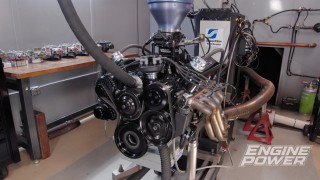
full accessory drive. Now the headers are a little goofy, I'm going to admit, because we have an upside down header that's normally shorter than you would run if you were just strictly running it naturally aspirated, but still big though.
It's still a nice size header,
no spacer because you know this is a configuration of basically what it's going to be without the turbo system of what it's going to be going to.
In the vehicle what I programmed in is we're going to be running this thing from 3000 to 6500. We have loaded it on preliminary runs down as low as 2000.
The injection works perfectly on this thing
when everything is right,
it's a pleasure, right,
because everything just does what it's supposed to and everything is
just tip top on this. So
all right, we're going to get
a run in here.
Man, I saw some torque numbers there. So there we go.
So yeah, so
445.7 pound feet looks like right at 4900 probably.
And then we're making 475,
uh,
right,
right at 64, 6500. So I'm pleasantly surprised with that for a,
for a, a budget set of heads. I mean these, again, these things are under $1500 for a pair,
um,
a mild,
you know,
mid low 230s.
At 50 for the cam,
that's a very solid combo.
It's not made to turn a bunch of RPM. It's made to last a long time and not have any issues and all that kind of stuff. I know we sometimes get all caught up in what we're trying to build race engines for every engine.
Yes,
this one is,
this is, this is going to be a cruiser, not that it's not going to make big power when it gets the boosty boost to it, right?
Yes,
but getting a nice engine,
making sure naturally aspirated, we have a number so that Means when we
do our boost we know
per PSI about what it's going to make.
So there are going to be some factors again nice part about this, this is a
look at that beautiful accessory drive on there belt track's nice.
Everything's really, really sweet. No, it looks,
looks spectacular. Like that's,
I mean,
that's what they wanted. They want something that looks good so they can stick it between the frame rails.
If we're building a race rocket,
we'd probably have a solid roller in it,
a big ass spacer on it, and
Really be cranking on this thing to really extract every little ounce out of it, but
we have the cushion factor in it
for the boost.
Let me make a little backup hole back up and see it.
What I like is and we can get this thing ice cold
and we could pick up probably some power, but probably, but I mean we're at 169, 170 degrees, so like we're, yeah, watch this
street edges.
Right to 6500.
It's watching.
I guarantee it's probably going to overlay that line.
Yeah,
it's, it's actually, I think it made a 78 there.
So it's a 122y up top.
So I mean that's a,
that is a,
I mean at tip, that's a consistent combo and
looking at all of just the main data,
everything looks good. The,
the
fuel, how much fuel is going through, it's good.
Yes,
still, as again, very relatively safe. So you know if this thing ever gets hot or it sits in traffic or whatever, this is.
This is a, you know, a street verified combo.
That's what our number.
That's what it's designed to be is a street combo.
So we're not building a
bracket blast or weekender,
right?
We're not putting it on kill.
So no, this is not on kill.
What it is on is ready for a turbo now.
So yeah, I mean, I hate to take it apart because it's running so nice,
but honestly it's gonna be worth it.
Swap the headers around and just do a couple of things, but set up on it,
whatever,
whatever that thing is.
Yeah,
all right, cool.
Here we go.
Kill it.
We'll cool it off and get it apart, I guess.
To convert the exhaust into turbo mode,
we just have to remove these Flowtec 1 and 7/8 inch primary headers and swap them side to side so they face forward.
This is how they're intended to be used and generally clear most hoods and accessory drives.
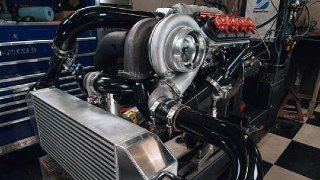
You might remember this from the last episode. This is the hot side kit that we built specifically for the Tahoe this engine's going in.
Since then, we got it fully welded,
added a waste gate port,
our Summit Racing billet 3-inch to T4 flange, and hopefully,
this thing should fit
perfectly like it's supposed to.
Look at that.
Before you just get the clamp on.
This color matched hair dryer is a VS Racing 7875 with a 0.96 AR
and is paired with a Summit Racing 60 millimeter waist gate to control boost.
After installing the downpipe and the waist gate dump,
our painted carb hat is tightened on top of the FTech unit.
This cold side setup is strictly for the dyno, but features a 50 millimeter blowoff valve and a stock Duramax charge air cooler with 2.5 inch piping.
Coming up,
you build cool stuff. I wanna see it run.
We're at 551 pound feet at load in there and we're coming up to over 600 pound feet basically immediately.
All right,
it is turbo time. We have the engine on. It is purring like a kitten on there, and we have the guys from Blacktop here.
You're almost a regular fixture here because, you know, you come in here for the dyno,
you see
your engine and what it's gonna do.
So it's awesome.
Thank you for having us. I say you build cool stuff. I want to see it run. I, I,
we appreciate that. I love coming down.
Well, the last time you guys saw this, it wasn't even like an actual engine. It was just the,
the headers sitting in the top.
So from there to now
is that we got, you know,
obviously we download this thing naturally aspirated.
It made good power. It made mid.
470s and we've talked about it it's a mild combo because we're putting boost on it. So
now we've been
making runs, uh, 20 on this thing,
adding boost incrementally.
I think we've got it in a good happy range where a this thing will live forever even on a stock block,
um, and it's got a nice safe tune up in it. So
you know we've been running this thing at temp165 degrees. It will never hurt itself and it's making
really, really good power so far.
Yeah.
Hey,
throw the gas to it, man. We'll see what it does.
All right, let's just do that.
Let's see what it does. 93 octane.
There we go,
all pump gas full temp.
Sorely noise.
9 TSI.
Turbo stuff's like, it's,
it's gentle horsepower, right, right.
We got 649.1.
Where is that? That's right at 4000
and 637,
where is that? 637.8
at 5900. Yeah,
pretty even across the board right there.
And that's an operating now, the turbo's gonna get a little heat in here, but then we,
we can make,
we can make a little run run here and, uh,
and that, the number will come up.
We could cool this thing down to a 100 degree water temp,
and it'd make 20 or.
30 or,
you know, whatever more,
but
this is like,
like, it's been running on this di right now for about an hour.
We want, we want oil temp,
we want this thing at temp,
see this thing's creeping around in traffic.
This is, this is what it's, you know,
built to do.
We're at 551 pound feet at load in there.
We're coming up to over 600 pound feet basically immediately,
and then it's just riding around 640s per pound feet all the way until,
you know, 4800 or so.
So I mean this is a killer drivable.
Engine though,
you know what I mean? That's, that's the goal.
This is a tire meltter what it is,
you know.
So yeah,
this is right on the edge of usable versus just,
you know,
insane amounts of horsepower, but you know it's not 1000 horsepower. It doesn't need 1000 horsepower. I mean, we could make it, make that,
but at,
at some point, you know,
we always design things around what the parts can take,
right?
All right, let's,
let's make another,
we'll, we'll back out of here and uh real quick it'll, it'll pick it up a little bit and yeah,
we'll see what it does here.
All right,
Ready?
Everybody feel good.
That sound never gets older.
I'm I'm starting to come around.
I can't even believe I said that.
This kind of smokes through the pole.
No problem. Look at that
649 pound feet of torque,
651 horse.
It's awesome. Can you imagine 6000 pounds of two door Tahoe
making that noise coming at you that fast.
That now, are you gonna keep it quiet? Are you gonna put any
like hater pipe on or anything like that?
Or we'll see.
I don't wanna give you too much.
It's,
well, being
it has a turbo on the side of it. It's,
it's, it's relatively quiet. I mean, compared to like a, you know,
a, a thumping big block and stuff,
but.
The cool thing is, as soon as you get in the boost, that waist gate opens, you know,
and you start hearing it all.
So if you,
if you look at this pole, you know, that loading is a little bit better we're loading in at 582 pound feet,
and you know, you're not going to rev it past,
you know, 6500, but uh
it's still making 507 pound feet out there.
It's still making 627 horse.
So that's pretty glorious.
I'm happy.
Yeah, we.
And you, you, uh,
this,
you know,
designed for 93 octane pump gas, right?
And, uh, if you're, if you keep the right gas in it and don't run it out of oil and, and just, uh, keep, keep track of it,
it'll, it'll last forever.
The front billet drive, probably one of the best that I've seen,
man.
I'm a 90s,
you know,
guy. I'm an 80s baby,
but dude, that takes me back to when I was in school, you know what I mean, what you would see at car shows,
the. Full billet front is
impeccable, man. It's gonna look so badass in there.
And because we did the,
the, uh, the kit,
you know,
for the vehicle,
you just drop it in. You don't have,
you know, you don't have to do any messing around.
So yeah,
no, it's awesome, guys. All right, man,
we'll get it, uh, shut down. We'll do our health check on it, and when it's done,
we'll,
we'll roll it down to you. So let's go, man.
All right,
thank y'all.
Appreciate it, buddy.
Thanks, man.
Y'all. Have a good one.
Hey,
and us
great success.
Heck yeah.
Show Full Transcript
Today on Engine Power,
starting to come around on the turbo sounds, right?
The power plant for Blacktop Speed Shop's Turbo Tahoe gets finished up.
It gets budget friendly induction,
looks that could kill,
and gets put under pressure
in the dyno room.
This is a killer drivable engine though.
Yeah,
this is a tire melter. That's what it is, you know.
Hey everybody,
welcome back to Engine Power.
Today we are gonna be wrapping up this small block Chevy Stroker that we are building
for blacktop Speed Shop. This is going to be a turbocharged 385 cubic inch engine.
We have a 4044 3750 inch stroke.
We've got to this point because last time we did a lot of the machine work and prep work. So we got our block prep,
we balanced our Forge rotating assembly,
we painted all of our parts in their color of choice, and then we got it to short block status with our 3750 inch stroke and our Forge 4040.
4 pistons.
We have a summit Racing step nose hydraulic roller cam in there.
So it's a nice mild,
easy combination. It's going to make great power turbocharged,
and today we've got everything prepped, so we're going to wrap it up.
Yes,
we are on the downhill slide of getting this thing together and on the dyno.
We are going to put in our oiling system,
our induction package, our damper, and best of all,
we are going to dyno it two different ways.
First,
naturally aspirated to see what this budget bullet makes,
and then we're going to put the squeeze to it to make the big power. So we've got a lot to do today.
You
mean that?
To seal up the front cover, we're just using a brand new timing cover gasket and some RTV
and for this build,
because we don't need to run a cam button, we have that step nose cam, we're running a stamped steel chrome timing cover to match the look
and we're gonna be holding it down with a set of ARP
stainless timing cover bolts. So this is a complete kit that they offer for small block Chevy and a bunch of other applications.
So these are made from a 300 series stainless,
and they.
Are actually extremely strong, so these have a tensile strength of around 170 to 190,000 PSI, which if you're not familiar,
is way higher than even like a grade 8 fastener.
The entire fastener is polished when it leaves their facility,
and you can compare these next to like a regular zinc coated grade 8 fastener,
and they just look so.
Much better. So when you're doing
a fit and finish polish build like this,
these things pop against black, red,
polished aluminum,
chrome,
whatever,
they're gonna make your whole engine bay look really, really nice. So
for stuff like this, we like to deck the entire engine out in these fasteners, and ARP makes these in a bunch of different kits for a bunch of different applications.
So ARP makes accessory kits for
basically every part on the engine timing covers, oil pans, intakes,
everything from the throttle body or carburetor
all the way to the bottom of the oil pan,
and they do specialty fasteners like damper bolts,
oil pump studs, all kinds of stuff like that.
So they make them in stainless and they. They have an '8740 Cro Molly that they put a nice black oxide coating on.
You can get individual kits or you can even get
complete engine accessory kits that have every bolt you need if you wanna go that route. So
next we're gonna put on our oil pumps. We're gonna put one of their oil pump studs in and keep moving forward.
The stud is screwed in hand tight with thread locker,
and the gasket supplied in this summit pro pan kit is put in place.
The kit also came with a high volume oil pump and pickup to match the 6 quart rear sump pan.
The ARP nut is torqued to 60 pound feet to hold it in place.
Then we can use a straight edge and a tape measure to verify our pickup clearance at 3/8 of an inch.
The included one-piece oil pan gasket is set into place with RTV on the edges and corners to help prevent leaks.
Actually, a quick tip on this is when we're doing this,
before we actually do anything, we
put the pan on,
make sure all the bolts go in, make sure everything is tight because there's nothing worse than getting everything all slicked up with silicone
and then
putting the pan on and having a slight misalignment where you can't get all the bolts in.
You've got to take the whole thing back off.
So
we've already done that.
This oil pan already has our 10 turbo drain welded in and can be tightened down with a set of ARP stainless fasteners.
A 7.25 inch fluid damper will help control the engine's harmonics and is pressed on with an installation tool.
We'll also install this matching summit adjustable timing pointer,
which will be set for true TDC as well.
For this build, we're going to take advantage of the OE roller lifter provisions and use a set of stock replacement 842 roller lifters.
Factory dog bones keep the lifters aligned and prevent rotation,
and this is the stock spider tray that holds them down, and it is torque to 18 pound.
A set of MLS 4060 bore head gaskets with a 30,000 thickness are used to seal up the anticipated boost coming this engine's way.
All right, you know you're doing well when the cylinder heads are going on.
So our cylinder head of choice for this project is a Summit Racing ASC 200 cc head.
These are a very affordable head that gives great performance for the price point.
Now, if I'm not mistaken, you actually flowed these,
didn't you?
Yes,
so they have a 20.
intake,
1 600 exhaust,
they float 260 CFM at 600 lift, which
for a head that is,
these are under $1500 for a pair,
so really good price.
And honestly, we don't need anything crazy because we're boosting this engine so we can have a nice mild combo
and then we just pour the boost to it after.
We're using a set of ARP 8740 head bolts to cinch our cylinder heads down, and because it's a stock block and the bolts go into coolant,
they all receive non-hardening thread sealer.
With ARP Ultra Torque in between the head of the bolt and the top of the washer,
they can all be snugg down with an impact and then torqued in 3 stages to a final value of £70 feet.
Mm
Stick around because this 383 gets sealed up,
dressed up,
and hooked up
to the dyno for testing.
We're going to start by putting the rest of the valve train on this 383,
and luckily we already had a set of trick flow 7300 long,
80,000 small 516 pushrods in-house.
They are all slid in with high pressure grease on both ends,
and the rocker studs and valve tips receive some as well.
These thrifty 38 stud extruded aluminum body roller rocker arms with a 1.6 ratio go on next and are installed in pairs in the engine's firing order.
This build is using a standard SPC firing order,
and each rocker arm is adjusted to one half turn past zero lash.
With precision beads of RTV on the china walls,
we can lay this Super Victor single-plane intake into place and lock it down with stainless ARP fasteners.
After the valve train is prelubed, the top end gets sealed up with these classic color-matched valve covers.
All right, one of the last things we need to install over here in the assembly area is our
front drive, and being that this is a SEA build and
fits what the guys in Blacktop wanted, we're using an evolution kit from March Performance, which is basically like the top of the line of their accessory drives.
This is a complete kit, so it comes with everything you'll need to install it and is well engineered so everything lines up perfectly.
For Blacktop's Tahoe build,
it comes specced with a 300 amp alternator,
GM type power steering,
and a sandon AC compressor.
All right, that's the last billet cover on this front drive and it looks amazing.
Absolutely fits this build.
This thing looks spectacular. So now we're going to get it into the dyno room,
figure out fuel and ignition,
and run it naturally aspirated.
Our 383 is into the dyno room, pretty much set up and almost ready to go. We do have our turbo headers flipped around because we're gonna run them
low, but they hit our engine mount, so we're just gonna run them like boat headers for now, which will be fine.
And we're gonna be topping this thing with a PTech Go EFI 1200 horsepower power adder unit. So this is a throttle body EFI system,
has 8 internal injectors with enough flow for up to 1200 horsepower,
and it has a bunch of cool other features like.
It has an internal fuel regulator, so you don't need to run an external one.
It has all the sensors housed inside,
including a 2.5 bar map sensor, so you can run this thing
for boost, either supercharged or turbocharged like we're going to,
and these things have a fully annular discharge in the venturis for proper fuel atomization.
They have nitrous control. They have dual fan control, and they have ignition time control, which we're going to use with some of their other components.
Yes, we.
the whole set up to run the ignition.
Pech has their own CDI box. It is called their Ghost Spark. It works great.
We also have one of their distributors and coils, plus a set of wires and their cap here.
Everything is going to work fantastic on this.
It's going to go in great and control everything like we need to. We like full control,
both ignition and fuel.
This is going to fit the bill,
so all we got to do is to get this stuff on the dyno and in the engine.
The EFI and ignition only take a few simple connections like battery power and ground.
And after priming the engine with oil, we can drop in the magnetic pickup distributor.
These custom-made ceramic boot wires are hooked to the spark plugs and then dual dash 6 fuel lines are tightened on the unit before we can turn the key on this 383.
Up next,
you know,
so I always do the naturally aspirated ones because, yeah, I think you put the boosted on me in case it blows up.
All right, so obviously 383 running on the dyno. So
these things, we like to get them up,
get them up to temp,
uh, we double check out everything, obviously, make sure the engine's working as it should. There's no leaks,
everything like that.
We get this thing up to temp,
get it learning.
Uh,
we cycle it through a few pools,
basically just, again, making sure everything's working the way it's supposed to, which is great.
That's why we download these things naturally aspirated before we put boost on them,
so we're not trying to figure out if it's a,
you know, a boosted problem.
Anything like that, we can dyno it and
figure out, make sure everything works, get the tune-up dialed in, and then incorporate the variable of boost. So,
so far we've been making a few preliminary pulls.
Pretty safe on the tune-up still, honestly, we're not gonna get crazy with it, but, uh, this thing's making pretty good power.
We're gonna see what it does with a, with a hot tune-up in it.
You know,
so I always do the naturally aspirated ones because, yeah, I think you put the boosted on me in case it blows up. I'm pretty sure is what it is.
That, that's what happens.
See at this power level, you know, it's going to be OK.
This is really cool. This is a
full accessory drive. Now the headers are a little goofy, I'm going to admit, because we have an upside down header that's normally shorter than you would run if you were just strictly running it naturally aspirated, but still big though.
It's still a nice size header,
no spacer because you know this is a configuration of basically what it's going to be without the turbo system of what it's going to be going to.
In the vehicle what I programmed in is we're going to be running this thing from 3000 to 6500. We have loaded it on preliminary runs down as low as 2000.
The injection works perfectly on this thing
when everything is right,
it's a pleasure, right,
because everything just does what it's supposed to and everything is
just tip top on this. So
all right, we're going to get
a run in here.
Man, I saw some torque numbers there. So there we go.
So yeah, so
445.7 pound feet looks like right at 4900 probably.
And then we're making 475,
uh,
right,
right at 64, 6500. So I'm pleasantly surprised with that for a,
for a, a budget set of heads. I mean these, again, these things are under $1500 for a pair,
um,
a mild,
you know,
mid low 230s.
At 50 for the cam,
that's a very solid combo.
It's not made to turn a bunch of RPM. It's made to last a long time and not have any issues and all that kind of stuff. I know we sometimes get all caught up in what we're trying to build race engines for every engine.
Yes,
this one is,
this is, this is going to be a cruiser, not that it's not going to make big power when it gets the boosty boost to it, right?
Yes,
but getting a nice engine,
making sure naturally aspirated, we have a number so that Means when we
do our boost we know
per PSI about what it's going to make.
So there are going to be some factors again nice part about this, this is a
look at that beautiful accessory drive on there belt track's nice.
Everything's really, really sweet. No, it looks,
looks spectacular. Like that's,
I mean,
that's what they wanted. They want something that looks good so they can stick it between the frame rails.
If we're building a race rocket,
we'd probably have a solid roller in it,
a big ass spacer on it, and
Really be cranking on this thing to really extract every little ounce out of it, but
we have the cushion factor in it
for the boost.
Let me make a little backup hole back up and see it.
What I like is and we can get this thing ice cold
and we could pick up probably some power, but probably, but I mean we're at 169, 170 degrees, so like we're, yeah, watch this
street edges.
Right to 6500.
It's watching.
I guarantee it's probably going to overlay that line.
Yeah,
it's, it's actually, I think it made a 78 there.
So it's a 122y up top.
So I mean that's a,
that is a,
I mean at tip, that's a consistent combo and
looking at all of just the main data,
everything looks good. The,
the
fuel, how much fuel is going through, it's good.
Yes,
still, as again, very relatively safe. So you know if this thing ever gets hot or it sits in traffic or whatever, this is.
This is a, you know, a street verified combo.
That's what our number.
That's what it's designed to be is a street combo.
So we're not building a
bracket blast or weekender,
right?
We're not putting it on kill.
So no, this is not on kill.
What it is on is ready for a turbo now.
So yeah, I mean, I hate to take it apart because it's running so nice,
but honestly it's gonna be worth it.
Swap the headers around and just do a couple of things, but set up on it,
whatever,
whatever that thing is.
Yeah,
all right, cool.
Here we go.
Kill it.
We'll cool it off and get it apart, I guess.
To convert the exhaust into turbo mode,
we just have to remove these Flowtec 1 and 7/8 inch primary headers and swap them side to side so they face forward.
This is how they're intended to be used and generally clear most hoods and accessory drives.
You might remember this from the last episode. This is the hot side kit that we built specifically for the Tahoe this engine's going in.
Since then, we got it fully welded,
added a waste gate port,
our Summit Racing billet 3-inch to T4 flange, and hopefully,
this thing should fit
perfectly like it's supposed to.
Look at that.
Before you just get the clamp on.
This color matched hair dryer is a VS Racing 7875 with a 0.96 AR
and is paired with a Summit Racing 60 millimeter waist gate to control boost.
After installing the downpipe and the waist gate dump,
our painted carb hat is tightened on top of the FTech unit.
This cold side setup is strictly for the dyno, but features a 50 millimeter blowoff valve and a stock Duramax charge air cooler with 2.5 inch piping.
Coming up,
you build cool stuff. I wanna see it run.
We're at 551 pound feet at load in there and we're coming up to over 600 pound feet basically immediately.
All right,
it is turbo time. We have the engine on. It is purring like a kitten on there, and we have the guys from Blacktop here.
You're almost a regular fixture here because, you know, you come in here for the dyno,
you see
your engine and what it's gonna do.
So it's awesome.
Thank you for having us. I say you build cool stuff. I want to see it run. I, I,
we appreciate that. I love coming down.
Well, the last time you guys saw this, it wasn't even like an actual engine. It was just the,
the headers sitting in the top.
So from there to now
is that we got, you know,
obviously we download this thing naturally aspirated.
It made good power. It made mid.
470s and we've talked about it it's a mild combo because we're putting boost on it. So
now we've been
making runs, uh, 20 on this thing,
adding boost incrementally.
I think we've got it in a good happy range where a this thing will live forever even on a stock block,
um, and it's got a nice safe tune up in it. So
you know we've been running this thing at temp165 degrees. It will never hurt itself and it's making
really, really good power so far.
Yeah.
Hey,
throw the gas to it, man. We'll see what it does.
All right, let's just do that.
Let's see what it does. 93 octane.
There we go,
all pump gas full temp.
Sorely noise.
9 TSI.
Turbo stuff's like, it's,
it's gentle horsepower, right, right.
We got 649.1.
Where is that? That's right at 4000
and 637,
where is that? 637.8
at 5900. Yeah,
pretty even across the board right there.
And that's an operating now, the turbo's gonna get a little heat in here, but then we,
we can make,
we can make a little run run here and, uh,
and that, the number will come up.
We could cool this thing down to a 100 degree water temp,
and it'd make 20 or.
30 or,
you know, whatever more,
but
this is like,
like, it's been running on this di right now for about an hour.
We want, we want oil temp,
we want this thing at temp,
see this thing's creeping around in traffic.
This is, this is what it's, you know,
built to do.
We're at 551 pound feet at load in there.
We're coming up to over 600 pound feet basically immediately,
and then it's just riding around 640s per pound feet all the way until,
you know, 4800 or so.
So I mean this is a killer drivable.
Engine though,
you know what I mean? That's, that's the goal.
This is a tire meltter what it is,
you know.
So yeah,
this is right on the edge of usable versus just,
you know,
insane amounts of horsepower, but you know it's not 1000 horsepower. It doesn't need 1000 horsepower. I mean, we could make it, make that,
but at,
at some point, you know,
we always design things around what the parts can take,
right?
All right, let's,
let's make another,
we'll, we'll back out of here and uh real quick it'll, it'll pick it up a little bit and yeah,
we'll see what it does here.
All right,
Ready?
Everybody feel good.
That sound never gets older.
I'm I'm starting to come around.
I can't even believe I said that.
This kind of smokes through the pole.
No problem. Look at that
649 pound feet of torque,
651 horse.
It's awesome. Can you imagine 6000 pounds of two door Tahoe
making that noise coming at you that fast.
That now, are you gonna keep it quiet? Are you gonna put any
like hater pipe on or anything like that?
Or we'll see.
I don't wanna give you too much.
It's,
well, being
it has a turbo on the side of it. It's,
it's, it's relatively quiet. I mean, compared to like a, you know,
a, a thumping big block and stuff,
but.
The cool thing is, as soon as you get in the boost, that waist gate opens, you know,
and you start hearing it all.
So if you,
if you look at this pole, you know, that loading is a little bit better we're loading in at 582 pound feet,
and you know, you're not going to rev it past,
you know, 6500, but uh
it's still making 507 pound feet out there.
It's still making 627 horse.
So that's pretty glorious.
I'm happy.
Yeah, we.
And you, you, uh,
this,
you know,
designed for 93 octane pump gas, right?
And, uh, if you're, if you keep the right gas in it and don't run it out of oil and, and just, uh, keep, keep track of it,
it'll, it'll last forever.
The front billet drive, probably one of the best that I've seen,
man.
I'm a 90s,
you know,
guy. I'm an 80s baby,
but dude, that takes me back to when I was in school, you know what I mean, what you would see at car shows,
the. Full billet front is
impeccable, man. It's gonna look so badass in there.
And because we did the,
the, uh, the kit,
you know,
for the vehicle,
you just drop it in. You don't have,
you know, you don't have to do any messing around.
So yeah,
no, it's awesome, guys. All right, man,
we'll get it, uh, shut down. We'll do our health check on it, and when it's done,
we'll,
we'll roll it down to you. So let's go, man.
All right,
thank y'all.
Appreciate it, buddy.
Thanks, man.
Y'all. Have a good one.
Hey,
and us
great success.
Heck yeah.
Engine Power Featured Projects
Engine Power Builds


Want more content like this?
Join the PowerNation Email NewsletterParts Used In This Episode

Summit Racing
Summit Racing 64cc Aluminum Cylinder Heads for Small Chevy
March Performance
Small Block Chevy All Inclusive Evolution Serpentine System