Video Transcript
[Frankie] You're
watching Powernation.
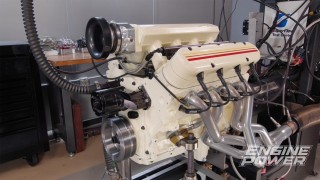
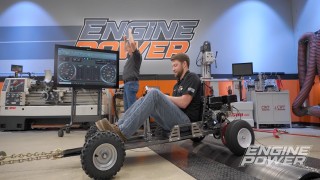
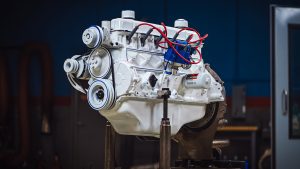
[ Music ] [Frankie] Hey everyone, welcome to another episode of Engine Power. As you can tell, we are not in the Engine Power shop. That is because we are at the University of Northwestern Ohio. We are here in their motorsports team building. This is where all of the student run racing action happens. We have UMP modifieds, stock cars, even some drag action, and you probably recognize the power plant in this stock car. This is a 406 cubic inch class specific race engine we built last year in our shop with university students, and today we're going to do something just as cool. We're going to build a 434 cubic inch UMP modified engine.
[Pat] That's right. We are building a brand new engine for a brand new chassis for this class and a lot of cool stuff. This is very high end 13 degree cylinder head package. Great induction. We have a great block, heads, crank, the whole deal. This is a high end engine and best of all it's being built by students. We have a great partnership with UNOH. They do a great job. So we have done a lot of prep work to get it ready for starting to click together, and we're going to do that right now. [ Music ]
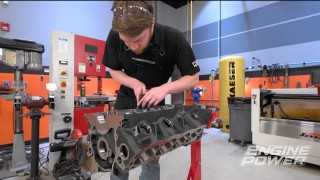
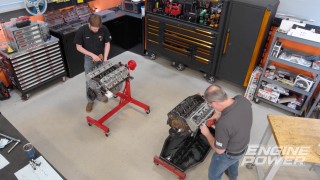
[Frankie] The UNOH Motorsports team has been working towards building this bullet for a competitive new chassis, and we worked with them to create a combination that team members Brett Bonkowski, Nash Moore, and Wilson Owens will be assembling. Nash and Brett came and built their 406 stock car engine last year in our shop, and Wilson is one of the top crew chiefs on the team. Once they have all the components cleaned and prepped we're jumping right into assembling. [Pat] The main bearing clearances have been set in this Motown two block with Clevite H-series bearings from 23 to 24 ten thousandths, and accept this beautiful Scat forged super light four inch stroke crankshaft from Summit Racing Equipment. It has micro finished journals, two inch rod throws, scalloped counterweights, and was precisely balanced on our CWT Multi-bal 5500. The doweled billet steel main caps are held down with ARP studs and bolts that are torqued from the inside out to 70 pound feet. [Frankie] For a high specific output engine like this one we needed the best in camshaft technology. So we picked a set of lobes from Comp Cams' TK solid roller series and had them grind up this gorgeous stick of billet. It has durations at 50 thousandths lift of 271 degrees on the intake and 285 degrees on the exhaust, with the lobe set on a relatively wide 110 degree LSA for increased piston valve clearance. Net valve lift with our rocker arm and lash is 713 thousandths on both for extended valve train longevity. [Pat] A cam adapter is added to the front as part of a complete timing belt drive system from Jessel valve train. Since it offers the best in adjustability, accuracy, and durability for camshaft control. Once the timing cover is cinched down the cam shaft's end play is within Jesel's spec with these thrust shims and the cam seal is installed for real.
Brett snakes the cam gear and belt on and the left hand threaded bolt that holds it is tightened to 70 pound feet.
[ torque wrench clicking ] [Frankie] In order to check the location of the camshaft we will install the number one piston and rod assembly.
[ impact driver humming ]
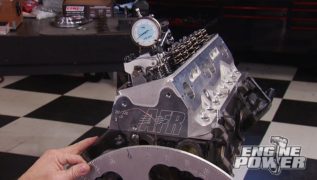
Then the students can set up their degree wheel and indicator to verify the intake centerline's location.
It comes in at 104 degrees, which is where the team members and us determined we want it for this application. The real check comes next with one of the cylinder heads temporarily installed with a set of checking springs so we can measure our piston to valve clearance. With the rocker arms on, push rods in, and lash it to the hot setting a magnetic base dial indicator confirms we have a tight but not dangerous 45 thousandths on the intake and for the exhaust. [Brett] We'll call that about 96. [Pat] With everything torqued and locked down the timing set is covered up with this dust cover to protect it on the dirt track. Then Wilson can install the harmonic damper, which is a six and a quarter viscous style from Fluidampr. It is pressed on with an installation tool, and for an extended use engine like this it is the perfect fit since it will continue to work just like new for a long time and does not need to be rebuilt every season. Coming up, some very smooth piston installation and then we get this short block sealed up to get it ready for dynoing.
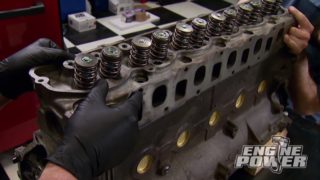
[Frankie] Our 434 cubic inch UMP modified engine build is sailing smoothly, and it's mainly because these three students have gained a ton of knowledge and experience in their time here at UNOH. The 200 acre campus is home to about 3000 students, and the goal is simple. Successful graduates with hands on knowledge. [Pat] Students can earn degrees in diesel and automotive technology, construction and ag equipment, robotics, hybrid electric vehicles and our favorite high performance motorsports. The students learn about 30% in the classroom and the rest is hands on in the shops. There are also a bunch of extra activities where students can get even more involvement and skill like the motor sports teams and the countless clubs, including the ones for drifting, drag racing, off road, autocross, diesel and more. [Frankie] We are quickly approaching short block status on this bullet, and the next thing we need to do is get our rings installed so we can put the rest of these rods and pistons in. For this application, being a high performance racing application, we wanted the best. So what we have is a Total Seal ring pack to match our DSS pistons. We have a three millimeter oil control ring pack. For the second ring we have a Napier second to help with that oil control. And then for the top ring this is where it really gets trick. We have a 440-B stainless AP steel ring that has gas ports machined into the top of it. So these are lateral gas ports that help combustion gases get behind the ring, push it out against the cylinder wall, and help sealing. We have all the rings gapped. We are at 23 thousandths on the top ring, 25 thousandths on the second ring. Nash and I will slide the remaining rings onto these custom three FX-series pistons from DSS Racing. They knock them out of the park and they have a very lightweight design in 2618 alloy, have a 16cc dish, precisely cut valve reliefs, ceramic coated top, and an abradable coating on the skirts. [Pat] Plenty of Total Seal assembly lube will keep them protected on startup, and they're attached to a set of Oliver 6-125 long two inch journal forged I-beam rods from Summit Racing Equipment. After all seven assemblies are installed into the block with a watchful eye, the engine can be flipped over to properly torque the seven-sixteenths ARP 2000 rod bolts. With ARP Ultra Torque applied and the stretch gauge zeroed out, they are torqued individually to 85 pound feet to achieve ARP's stretch specification of 52 to 57 ten thousandths. Nicely done. [Brett] 52 ten thousandths. [Frankie] Working towards sealing up the bottom end, the team will drop on this high dollar Melling billet aluminum high volume oil pump with an ARP driveshaft. This has an integral seven inch deep screen for a more secure pickup and it is torqued down with an ARP stud to 70 pound feet. [Pat] With a bead of rtv on the edges and a one piece oil pan gasket in place, this Champ Pans circle track pan we got from Summit Racing is snaked down. It has dual kick outs, internal baffling, a windage tray and crank scraper to help keep the pump submerged even with all of the G-forces this engine will see. The lifters are installed before the cylinder heads. And because we want this engine to have an almost indestructible valve train we are using a set of Jesel Pro tie-bar solid roller lifters. These have a 904 thousandths DLC coated body and an 820 thousandths tool steel wheel with needle bearing rollers for the ultimate in durability and having 175 thousandths offset pushrod cup for extra clearance. [Frankie] Sealing the cylinder heads is the same set of cometic MLS head gaskets we checked piston to valve clearance with. They have a 4-165 inch bore and a 40 thousandths compressed thickness, which puts our static compression ratio right at 13.73 to 1. [Pat] Our 434 is coming together nicely, and we are to the point now where we can stick some induction on. We have a really cool set of Profiler 13 degree heads, and those require a specialty fastener. So we went to ARP and got a set of studs particularly for this application. We have regular 7/16ths studs, and we also have some 3/8ths ones. Now they're all 7/16ths that go into the block but these reduced shank ones are made specially to clear the port. So they have a smaller hole in the cylinder head. They all are made out of 87-40 chromoly, and that has up to 180,000 psi of tensile strength. What we love about ARP is they have extensive engineering and they work closely with customers, whether it be a manufacturer or a consumer itself, to get a fastener exactly for the application. Now these also come with ARP Ultra Torque Lube and that is engineered specifically for these fasteners to get accurate torque values. It's time to get to work on this. The 7/16ths to 3/8ths studs are installed into a few of the center bolt holes. Then the Profiler 13 all American CNC heads can be gently slid on. This set has a 49cc chamber, a 300cc port that flows over 400 cfm at 700 lift and is filled with 2-200 titanium intakes and 1-600 titanium exhaust valves. With the remaining ARP studs in place and the 12 point hardware installed with Ultra Torque Lube the heads are torqued in three stages, which the 7/16ths studs going to 80 pound feet, and the step down studs going to 60 pound feet. [Frankie] You'll notice there are no exhaust springs on the heads, and that's because of the stud and valve locations. We had to leave them off during installation to access the nuts. 300 thousandths of an inch worth of shim goes underneath the rocker stand, which is needed to install the springs, and they are torqued to 65 pound feet with sealer on the bolt threads. We are using a packed 12-45 spring setup from Summit Racing. They are installed by filling the cylinders with compressed air, laying in the shims and locators, tapping in the valve stem seal, and then compressing the spring and titanium retainer with the UNOH team's custom made tool to install the valve locks. Up next, we wrap up this top tier track dominating bullet with the ultimate valvetrain and custom induction before it hits the dyno cell for some horsepower action.
[Pat] It's time to get the valvetrain in this 434 cubic inch UMP engine. So these Comp 3/8ths inch diameter nine inch long chromoly pushrods with an 80 thousandths wall thickness can be slid in by Brett.
They receive high pressure lube on both ends and are followed by the Jesel 1.7 ratio rockers in pairs. These are a pro aluminum shot peened shaft mounted set with a lightweight design and minimal deflection, with a 750 thousands offset intake rocker, needle bearing fulcrums, and tool steel nose rollers. They are installed with loose lash in the firing order, which is 1-8-7-3-6-5-4-2. [ Music ] And then Brett and Nash will go back around and set cold lash to 14 thousandths on both the intake and exhaust.
We are dangerously close to getting our 434 on the dyno here at UNOH. So the next thing that goes on is the intake system. Now this is a little bit unique. It is a two piece intake. This is a lower water manifold that stays on the block and the upper is separate in case you want to do it very fast as far as making changes. This a development from the NASCAR days to help development. So we're going to get ours on right now. The Edelbrock 18 degree water manifold is sealed by 120 thousandths phenolic spacers and is tightened with some ARP stainless hardware.
[Frankie] For the intake manifold side of this, this is a really nice Profiler manifold that matches the heads. We actually sent this out to Wilson Manifolds to be professionally port matched and ported in the plenum and the runners. They did an amazing job. It's very, very well done. Those guys over there know exactly what they're doing and it is sized appropriately for our application. So this is a piece of beauty going on top of the engine. The Wilson Profiler 41-50 13-degree intake manifold is laid into place and also cinched down tight with stainless fasteners. A set of Summit racing valve covers get put on next by Nash and Wilson, and they have some billet breathers installed on the driver's side for adequate crankcase ventilation. One piece rubber gaskets with compression stops are crushed all the way down with stainless steel studs. [Pat] For the most accurate ignition timing an MSD 6.25 inch crank trigger kit is attached to our damper and will pair with one of their distributors and capacitive discharge ignition boxes.
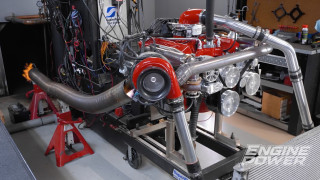
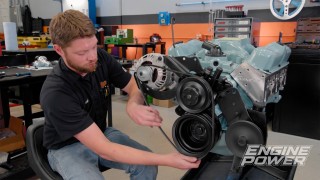
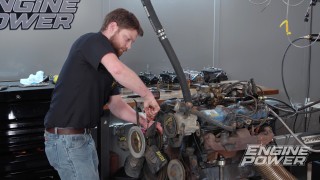
Because some accessories are driven off the transmission, the front drive is simple but critical to finishing races. So we went with the best, Jones Racing products. They design their drive mandrel to match our damper and crank trigger set up for the perfect belt alignment. And that rotates this Edelbrock high flow water pump and their lightweight, high output one way wire racing alternator, which are designed to run extended races and last. [Frankie] As you can see we are well on our way to the dyno. We have our 434 off the engine stand, onto a cradle. We've pounded in the rear cam plug. We've got lines made, belts on. We're getting real close. The last thing we're going to do here in the race shop is prime the engine with oil. That way we can check for leaks, make sure we don't have any issues. We're going to be filling it with Hot Shot's Secret Adrenaline R5 Racing Oil. This is a full group for PAO blend. This already has FR3 in the oil and that is their carbon nanoparticle which helps reduce friction and improve lubricity. So we're going to get maximum protection for our brand new bullet cause we're going to be thrashing this thing on the dyno. And then the students are going to be thrashing it at the racetrack. So our oil pan capacity is eight quarts with the filter. We've already filled the filter and had it installed. So we're going to get all of this in and get it primed. A priming tool on an electric drill spins the oil pump creating around 80 psi. And then the engine is rotated to make sure oil can get through all the different holes and passageways on its way through the engine. After a minute or so the engine is fully prime. It's time to get it loaded up and make the careful one mile journey across the UNOH campus to the most exciting building at the school, the high performance dyno shop. We've got our 434 here in the dyno cell here at UNOH. These guys are checking lash and coming up we're going to be making some full pulls for some big horsepower.
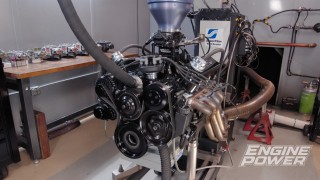
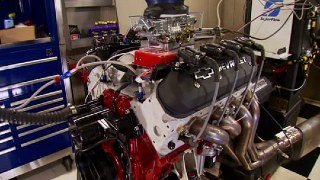
[Pat] Well here we are. This is the culmination of a lot of hard work by the students and us and our 434 is finally ready to rock. [Frankie] Yeah we are here in the high performance complex at UNOH, and we are in front of the dyno building as you saw. So this is where they house all the chassis and engine dyno. So we have it on a dyno cart. We're going to get this thing in a cell, get all our accessories on, start making some hot water. [Pat] Once the engine is hooked up, the fuel cell is filled with the team's Sunoco 112 octane leaded race fuel and the engine is lit off for the first time with a set of one and three quarter to one and seven-eighths circle track headers and a Quick Fuel Technologies Q-series 1050 annular carburetor. All right, well, if you're an engine guy this is one of your favorite sounds right here. [ engine revving ] We are on the dyno. The 434 is running nice. Did a few preliminary checks. Checked our lash. Went ahead and put a fresh set of plugs in it. Dumped some gas in it. Got our timing verified and now we are going to make some pulls. We are going to go from 5,000 to 7,000 because this is an engine that's going to run in that range. We're going to start out with what kind of timing do we have? [Frankie] So right now we're at 28. That sounds relatively low but you got to remember this is a really tight chamber. We aren't really high on compression but because of that tight chamber it's going to be really efficient. Think like an LS right but this is on steroids. So we're starting at 28. We'll probably start there, increment up, see how it picks up power, and then move on. But we're going to go what 5 to 7? So I'm ready when you are. Are you guys ready? [ ] Absolutely. [Frankie] These guys been putting in work all week. [Pat] Everything looks good. Here we go! [ engine revving ]
[Frankie] Oh man, that is wild. [Pat] That is pretty wild. [Frankie] That is a nice graph. [Pat] Making 818 horse and right now we're making 681 pound feet. [Frankie] That's a mean mamma jamma! [Brett] That's a mean motor. [Pat] Everything looks good. [Frankie] Let's put some timing in it. I think fuel looks good. [Pat] It is not going to take much more timing. What are we right now, 28? [Frankie] Let's go 30 and we'll see what that does. I mean you guys normally end up running around 30 to 32. [Brett] That's exactly where we run it. [Frankie] I'm going to go put two in it and then we'll see what it does. [ engine revving ] [Pat] It's snappy. [Brett] Oh yeah. It's very.
[Frankie] All right, we have jumped from 28 to 30 degrees of timing. Got a really stable ignition with that MSD crank trigger set up. So it's easy to change and we're ready to make another hit. See if we can get some gains. [Pat] Let her eat. [ engine revving ]
Wow, that thing's cool. [Frankie] That thing is mean. 823 horsepower, 684 pound feet. [Pat] So not a big jump and that's okay. [Frankie] I think because we saw the torque go up. I think maybe one more. [Pat] I mean one degree increments as all I'm really comfortable with. [Frankie] Let's do one and we'll go see what it does. [ engine rumbling ]
[Pat] We're going to do a final run here. We're looking good. We're creeping this thing up. It is very, very close on everything. [Frankie] We're at 31 now. [Pat] This one's going to look really good I hope. [Frankie] Make a hit on it. [ engine revving ]
[Pat] That was big! That was big!
829! That's a high five right there. [Frankie] 829 and 687.1 pound feet. That is a bullet right there. I'm going to shut it off so we can talk here for a second. But I mean I know how you guys feel. This is like the most exciting thing ever. [Pat] So when you were tightening those rod bolts where you're thinking what's going on here? [Brett] I was just blown out of the water. Just seeing the quality of parts and everything that you guys brought. I mean, I know we had that great cylinder head package and everything. So seeing what you guys were able to do with that and take it to that next level and seeing these numbers. 829 horsepower, that's incredible. That's going to do great around Limaland and any other track that we race. Thank you guys. [Pat] You guys did a great job. Now you've got a new ripper for a new chassis. [Frankie] I can't wait to see what it does. [Pat] We are going to be watching closely what this thing goes. Let's check some plugs. Get it back to this car shop. [ engine revving ]
Show Full Transcript
[ Music ] [Frankie] Hey everyone, welcome to another episode of Engine Power. As you can tell, we are not in the Engine Power shop. That is because we are at the University of Northwestern Ohio. We are here in their motorsports team building. This is where all of the student run racing action happens. We have UMP modifieds, stock cars, even some drag action, and you probably recognize the power plant in this stock car. This is a 406 cubic inch class specific race engine we built last year in our shop with university students, and today we're going to do something just as cool. We're going to build a 434 cubic inch UMP modified engine.
[Pat] That's right. We are building a brand new engine for a brand new chassis for this class and a lot of cool stuff. This is very high end 13 degree cylinder head package. Great induction. We have a great block, heads, crank, the whole deal. This is a high end engine and best of all it's being built by students. We have a great partnership with UNOH. They do a great job. So we have done a lot of prep work to get it ready for starting to click together, and we're going to do that right now. [ Music ]
[Frankie] The UNOH Motorsports team has been working towards building this bullet for a competitive new chassis, and we worked with them to create a combination that team members Brett Bonkowski, Nash Moore, and Wilson Owens will be assembling. Nash and Brett came and built their 406 stock car engine last year in our shop, and Wilson is one of the top crew chiefs on the team. Once they have all the components cleaned and prepped we're jumping right into assembling. [Pat] The main bearing clearances have been set in this Motown two block with Clevite H-series bearings from 23 to 24 ten thousandths, and accept this beautiful Scat forged super light four inch stroke crankshaft from Summit Racing Equipment. It has micro finished journals, two inch rod throws, scalloped counterweights, and was precisely balanced on our CWT Multi-bal 5500. The doweled billet steel main caps are held down with ARP studs and bolts that are torqued from the inside out to 70 pound feet. [Frankie] For a high specific output engine like this one we needed the best in camshaft technology. So we picked a set of lobes from Comp Cams' TK solid roller series and had them grind up this gorgeous stick of billet. It has durations at 50 thousandths lift of 271 degrees on the intake and 285 degrees on the exhaust, with the lobe set on a relatively wide 110 degree LSA for increased piston valve clearance. Net valve lift with our rocker arm and lash is 713 thousandths on both for extended valve train longevity. [Pat] A cam adapter is added to the front as part of a complete timing belt drive system from Jessel valve train. Since it offers the best in adjustability, accuracy, and durability for camshaft control. Once the timing cover is cinched down the cam shaft's end play is within Jesel's spec with these thrust shims and the cam seal is installed for real.
Brett snakes the cam gear and belt on and the left hand threaded bolt that holds it is tightened to 70 pound feet.
[ torque wrench clicking ] [Frankie] In order to check the location of the camshaft we will install the number one piston and rod assembly.
[ impact driver humming ]
Then the students can set up their degree wheel and indicator to verify the intake centerline's location.
It comes in at 104 degrees, which is where the team members and us determined we want it for this application. The real check comes next with one of the cylinder heads temporarily installed with a set of checking springs so we can measure our piston to valve clearance. With the rocker arms on, push rods in, and lash it to the hot setting a magnetic base dial indicator confirms we have a tight but not dangerous 45 thousandths on the intake and for the exhaust. [Brett] We'll call that about 96. [Pat] With everything torqued and locked down the timing set is covered up with this dust cover to protect it on the dirt track. Then Wilson can install the harmonic damper, which is a six and a quarter viscous style from Fluidampr. It is pressed on with an installation tool, and for an extended use engine like this it is the perfect fit since it will continue to work just like new for a long time and does not need to be rebuilt every season. Coming up, some very smooth piston installation and then we get this short block sealed up to get it ready for dynoing.
[Frankie] Our 434 cubic inch UMP modified engine build is sailing smoothly, and it's mainly because these three students have gained a ton of knowledge and experience in their time here at UNOH. The 200 acre campus is home to about 3000 students, and the goal is simple. Successful graduates with hands on knowledge. [Pat] Students can earn degrees in diesel and automotive technology, construction and ag equipment, robotics, hybrid electric vehicles and our favorite high performance motorsports. The students learn about 30% in the classroom and the rest is hands on in the shops. There are also a bunch of extra activities where students can get even more involvement and skill like the motor sports teams and the countless clubs, including the ones for drifting, drag racing, off road, autocross, diesel and more. [Frankie] We are quickly approaching short block status on this bullet, and the next thing we need to do is get our rings installed so we can put the rest of these rods and pistons in. For this application, being a high performance racing application, we wanted the best. So what we have is a Total Seal ring pack to match our DSS pistons. We have a three millimeter oil control ring pack. For the second ring we have a Napier second to help with that oil control. And then for the top ring this is where it really gets trick. We have a 440-B stainless AP steel ring that has gas ports machined into the top of it. So these are lateral gas ports that help combustion gases get behind the ring, push it out against the cylinder wall, and help sealing. We have all the rings gapped. We are at 23 thousandths on the top ring, 25 thousandths on the second ring. Nash and I will slide the remaining rings onto these custom three FX-series pistons from DSS Racing. They knock them out of the park and they have a very lightweight design in 2618 alloy, have a 16cc dish, precisely cut valve reliefs, ceramic coated top, and an abradable coating on the skirts. [Pat] Plenty of Total Seal assembly lube will keep them protected on startup, and they're attached to a set of Oliver 6-125 long two inch journal forged I-beam rods from Summit Racing Equipment. After all seven assemblies are installed into the block with a watchful eye, the engine can be flipped over to properly torque the seven-sixteenths ARP 2000 rod bolts. With ARP Ultra Torque applied and the stretch gauge zeroed out, they are torqued individually to 85 pound feet to achieve ARP's stretch specification of 52 to 57 ten thousandths. Nicely done. [Brett] 52 ten thousandths. [Frankie] Working towards sealing up the bottom end, the team will drop on this high dollar Melling billet aluminum high volume oil pump with an ARP driveshaft. This has an integral seven inch deep screen for a more secure pickup and it is torqued down with an ARP stud to 70 pound feet. [Pat] With a bead of rtv on the edges and a one piece oil pan gasket in place, this Champ Pans circle track pan we got from Summit Racing is snaked down. It has dual kick outs, internal baffling, a windage tray and crank scraper to help keep the pump submerged even with all of the G-forces this engine will see. The lifters are installed before the cylinder heads. And because we want this engine to have an almost indestructible valve train we are using a set of Jesel Pro tie-bar solid roller lifters. These have a 904 thousandths DLC coated body and an 820 thousandths tool steel wheel with needle bearing rollers for the ultimate in durability and having 175 thousandths offset pushrod cup for extra clearance. [Frankie] Sealing the cylinder heads is the same set of cometic MLS head gaskets we checked piston to valve clearance with. They have a 4-165 inch bore and a 40 thousandths compressed thickness, which puts our static compression ratio right at 13.73 to 1. [Pat] Our 434 is coming together nicely, and we are to the point now where we can stick some induction on. We have a really cool set of Profiler 13 degree heads, and those require a specialty fastener. So we went to ARP and got a set of studs particularly for this application. We have regular 7/16ths studs, and we also have some 3/8ths ones. Now they're all 7/16ths that go into the block but these reduced shank ones are made specially to clear the port. So they have a smaller hole in the cylinder head. They all are made out of 87-40 chromoly, and that has up to 180,000 psi of tensile strength. What we love about ARP is they have extensive engineering and they work closely with customers, whether it be a manufacturer or a consumer itself, to get a fastener exactly for the application. Now these also come with ARP Ultra Torque Lube and that is engineered specifically for these fasteners to get accurate torque values. It's time to get to work on this. The 7/16ths to 3/8ths studs are installed into a few of the center bolt holes. Then the Profiler 13 all American CNC heads can be gently slid on. This set has a 49cc chamber, a 300cc port that flows over 400 cfm at 700 lift and is filled with 2-200 titanium intakes and 1-600 titanium exhaust valves. With the remaining ARP studs in place and the 12 point hardware installed with Ultra Torque Lube the heads are torqued in three stages, which the 7/16ths studs going to 80 pound feet, and the step down studs going to 60 pound feet. [Frankie] You'll notice there are no exhaust springs on the heads, and that's because of the stud and valve locations. We had to leave them off during installation to access the nuts. 300 thousandths of an inch worth of shim goes underneath the rocker stand, which is needed to install the springs, and they are torqued to 65 pound feet with sealer on the bolt threads. We are using a packed 12-45 spring setup from Summit Racing. They are installed by filling the cylinders with compressed air, laying in the shims and locators, tapping in the valve stem seal, and then compressing the spring and titanium retainer with the UNOH team's custom made tool to install the valve locks. Up next, we wrap up this top tier track dominating bullet with the ultimate valvetrain and custom induction before it hits the dyno cell for some horsepower action.
[Pat] It's time to get the valvetrain in this 434 cubic inch UMP engine. So these Comp 3/8ths inch diameter nine inch long chromoly pushrods with an 80 thousandths wall thickness can be slid in by Brett.
They receive high pressure lube on both ends and are followed by the Jesel 1.7 ratio rockers in pairs. These are a pro aluminum shot peened shaft mounted set with a lightweight design and minimal deflection, with a 750 thousands offset intake rocker, needle bearing fulcrums, and tool steel nose rollers. They are installed with loose lash in the firing order, which is 1-8-7-3-6-5-4-2. [ Music ] And then Brett and Nash will go back around and set cold lash to 14 thousandths on both the intake and exhaust.
We are dangerously close to getting our 434 on the dyno here at UNOH. So the next thing that goes on is the intake system. Now this is a little bit unique. It is a two piece intake. This is a lower water manifold that stays on the block and the upper is separate in case you want to do it very fast as far as making changes. This a development from the NASCAR days to help development. So we're going to get ours on right now. The Edelbrock 18 degree water manifold is sealed by 120 thousandths phenolic spacers and is tightened with some ARP stainless hardware.
[Frankie] For the intake manifold side of this, this is a really nice Profiler manifold that matches the heads. We actually sent this out to Wilson Manifolds to be professionally port matched and ported in the plenum and the runners. They did an amazing job. It's very, very well done. Those guys over there know exactly what they're doing and it is sized appropriately for our application. So this is a piece of beauty going on top of the engine. The Wilson Profiler 41-50 13-degree intake manifold is laid into place and also cinched down tight with stainless fasteners. A set of Summit racing valve covers get put on next by Nash and Wilson, and they have some billet breathers installed on the driver's side for adequate crankcase ventilation. One piece rubber gaskets with compression stops are crushed all the way down with stainless steel studs. [Pat] For the most accurate ignition timing an MSD 6.25 inch crank trigger kit is attached to our damper and will pair with one of their distributors and capacitive discharge ignition boxes.
Because some accessories are driven off the transmission, the front drive is simple but critical to finishing races. So we went with the best, Jones Racing products. They design their drive mandrel to match our damper and crank trigger set up for the perfect belt alignment. And that rotates this Edelbrock high flow water pump and their lightweight, high output one way wire racing alternator, which are designed to run extended races and last. [Frankie] As you can see we are well on our way to the dyno. We have our 434 off the engine stand, onto a cradle. We've pounded in the rear cam plug. We've got lines made, belts on. We're getting real close. The last thing we're going to do here in the race shop is prime the engine with oil. That way we can check for leaks, make sure we don't have any issues. We're going to be filling it with Hot Shot's Secret Adrenaline R5 Racing Oil. This is a full group for PAO blend. This already has FR3 in the oil and that is their carbon nanoparticle which helps reduce friction and improve lubricity. So we're going to get maximum protection for our brand new bullet cause we're going to be thrashing this thing on the dyno. And then the students are going to be thrashing it at the racetrack. So our oil pan capacity is eight quarts with the filter. We've already filled the filter and had it installed. So we're going to get all of this in and get it primed. A priming tool on an electric drill spins the oil pump creating around 80 psi. And then the engine is rotated to make sure oil can get through all the different holes and passageways on its way through the engine. After a minute or so the engine is fully prime. It's time to get it loaded up and make the careful one mile journey across the UNOH campus to the most exciting building at the school, the high performance dyno shop. We've got our 434 here in the dyno cell here at UNOH. These guys are checking lash and coming up we're going to be making some full pulls for some big horsepower.
[Pat] Well here we are. This is the culmination of a lot of hard work by the students and us and our 434 is finally ready to rock. [Frankie] Yeah we are here in the high performance complex at UNOH, and we are in front of the dyno building as you saw. So this is where they house all the chassis and engine dyno. So we have it on a dyno cart. We're going to get this thing in a cell, get all our accessories on, start making some hot water. [Pat] Once the engine is hooked up, the fuel cell is filled with the team's Sunoco 112 octane leaded race fuel and the engine is lit off for the first time with a set of one and three quarter to one and seven-eighths circle track headers and a Quick Fuel Technologies Q-series 1050 annular carburetor. All right, well, if you're an engine guy this is one of your favorite sounds right here. [ engine revving ] We are on the dyno. The 434 is running nice. Did a few preliminary checks. Checked our lash. Went ahead and put a fresh set of plugs in it. Dumped some gas in it. Got our timing verified and now we are going to make some pulls. We are going to go from 5,000 to 7,000 because this is an engine that's going to run in that range. We're going to start out with what kind of timing do we have? [Frankie] So right now we're at 28. That sounds relatively low but you got to remember this is a really tight chamber. We aren't really high on compression but because of that tight chamber it's going to be really efficient. Think like an LS right but this is on steroids. So we're starting at 28. We'll probably start there, increment up, see how it picks up power, and then move on. But we're going to go what 5 to 7? So I'm ready when you are. Are you guys ready? [ ] Absolutely. [Frankie] These guys been putting in work all week. [Pat] Everything looks good. Here we go! [ engine revving ]
[Frankie] Oh man, that is wild. [Pat] That is pretty wild. [Frankie] That is a nice graph. [Pat] Making 818 horse and right now we're making 681 pound feet. [Frankie] That's a mean mamma jamma! [Brett] That's a mean motor. [Pat] Everything looks good. [Frankie] Let's put some timing in it. I think fuel looks good. [Pat] It is not going to take much more timing. What are we right now, 28? [Frankie] Let's go 30 and we'll see what that does. I mean you guys normally end up running around 30 to 32. [Brett] That's exactly where we run it. [Frankie] I'm going to go put two in it and then we'll see what it does. [ engine revving ] [Pat] It's snappy. [Brett] Oh yeah. It's very.
[Frankie] All right, we have jumped from 28 to 30 degrees of timing. Got a really stable ignition with that MSD crank trigger set up. So it's easy to change and we're ready to make another hit. See if we can get some gains. [Pat] Let her eat. [ engine revving ]
Wow, that thing's cool. [Frankie] That thing is mean. 823 horsepower, 684 pound feet. [Pat] So not a big jump and that's okay. [Frankie] I think because we saw the torque go up. I think maybe one more. [Pat] I mean one degree increments as all I'm really comfortable with. [Frankie] Let's do one and we'll go see what it does. [ engine rumbling ]
[Pat] We're going to do a final run here. We're looking good. We're creeping this thing up. It is very, very close on everything. [Frankie] We're at 31 now. [Pat] This one's going to look really good I hope. [Frankie] Make a hit on it. [ engine revving ]
[Pat] That was big! That was big!
829! That's a high five right there. [Frankie] 829 and 687.1 pound feet. That is a bullet right there. I'm going to shut it off so we can talk here for a second. But I mean I know how you guys feel. This is like the most exciting thing ever. [Pat] So when you were tightening those rod bolts where you're thinking what's going on here? [Brett] I was just blown out of the water. Just seeing the quality of parts and everything that you guys brought. I mean, I know we had that great cylinder head package and everything. So seeing what you guys were able to do with that and take it to that next level and seeing these numbers. 829 horsepower, that's incredible. That's going to do great around Limaland and any other track that we race. Thank you guys. [Pat] You guys did a great job. Now you've got a new ripper for a new chassis. [Frankie] I can't wait to see what it does. [Pat] We are going to be watching closely what this thing goes. Let's check some plugs. Get it back to this car shop. [ engine revving ]
Engine Power Featured Projects
Engine Power Builds



Want more content like this?
Join the PowerNation Email NewsletterParts Used In This Episode


UNOH - University of Northwestern Ohio
UNOH Motorsports
Comp Cams
Comp Cams SBC Solid Roller Camshaft
CWT Industries
Multi-Bal 5500
DSS Racing
DSS Racing SBC 3FX Series Pistons
Edelbrock
HIgh Flow Water Pump
Edelbrock
Victor 18 Degree Water Manifold
Jesel Inc.
Jesel Belt Drive
Jesel Inc.
Jesel Pro Aluminum Shaft Mount Rocker Arms
Jesel Inc.
Jesel Timing Belt
Jesel Inc.
Pro-Tie Bar Lifter Set
Jones Racing Products
Accessory Drive
Pro-Filer Performance Products
Pro-Filer All American Race Series Cylinder Heads
WILSON MANIFOLDS
Wilson Profiler 13 SBC Manifold